

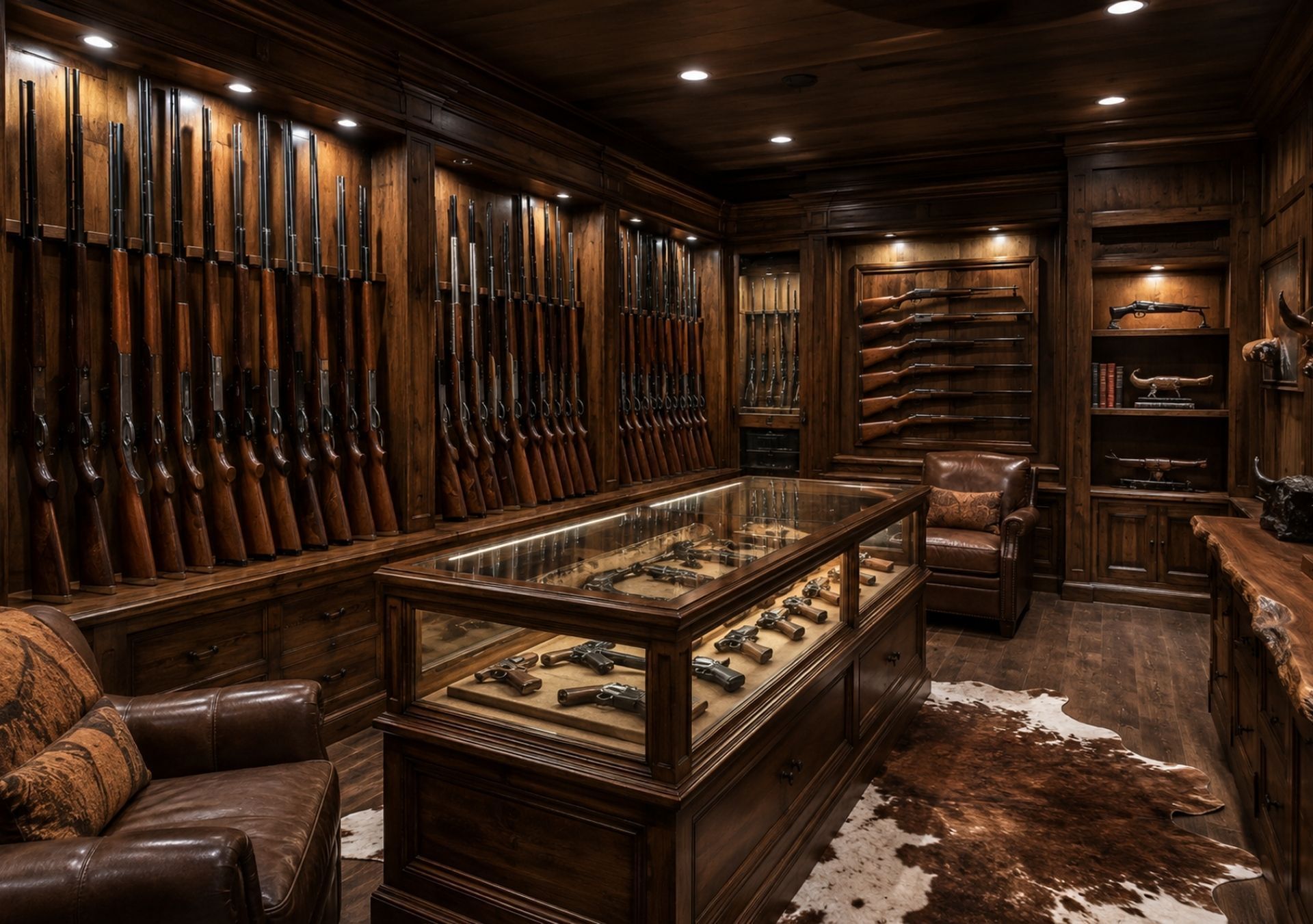
Texas is home to one of the largest firearms markets in the country, with the guns and ammunition manufacturing industry in the state
projected to reach a market size of $2.2 billion in 2026. That figure reflects not just commercial sales but a deeply rooted culture of ownership, collecting, and sport shooting. Whether you own a handful of inherited rifles or a vault full of pre-war Colts, the financial exposure of an uninsured or underinsured collection can be staggering. Getting the right insurance for your gun collection in Texas isn't optional if you're serious about protecting what you've built. The policies, endorsements, and legal nuances involved deserve a closer look, especially given the state's unique weather risks, theft statistics, and firearms culture. This guide breaks down what Texas collectors actually need to know, from coverage types and appraisal strategies to legal documentation and claims processes.
Understanding Firearms Coverage in the Lone Star State
Most Texas gun owners assume their firearms are already covered. That assumption has cost collectors tens of thousands of dollars in denied claims. The gap between what standard policies offer and what a serious collection requires is wider than most people realize.
Limitations of Standard Homeowners Policies
A typical Texas homeowners policy caps firearms coverage somewhere between $2,500 and $5,000. If you own a single hunting rifle, that might be fine. But if your collection includes a matching pair of engraved Browning Superposed shotguns or a Civil War-era Spencer carbine, you're looking at individual pieces that exceed that entire limit on their own.
Standard policies also tend to exclude key perils. Mysterious disappearance, for example, is almost never covered. If a firearm goes missing and you can't prove it was stolen with evidence of forced entry, you're out of luck. Flood damage, a real concern in Houston, Beaumont, and other Gulf Coast cities, requires a separate flood policy entirely. Your homeowners insurance won't cover a waterlogged collection after a tropical storm.
Defining Collectible vs. Utility Firearms
Insurers draw a line between firearms kept for personal use and those held as collectibles. A Glock 19 you carry daily is a utility firearm. A matching-serial-number set of Colt Single Action Army revolvers from the 1890s is a collectible. This matters because collectible firearms appreciate in value, sometimes dramatically, while utility guns depreciate.
Underwriters care about this distinction because it determines how they'll pay a claim. Utility firearms are typically settled at
actual cash value, meaning depreciated worth. Collectibles, on the other hand, should be insured at agreed value or replacement cost to reflect current market conditions. Misclassifying your firearms can leave you significantly underinsured.
Types of Gun Collection Insurance Available
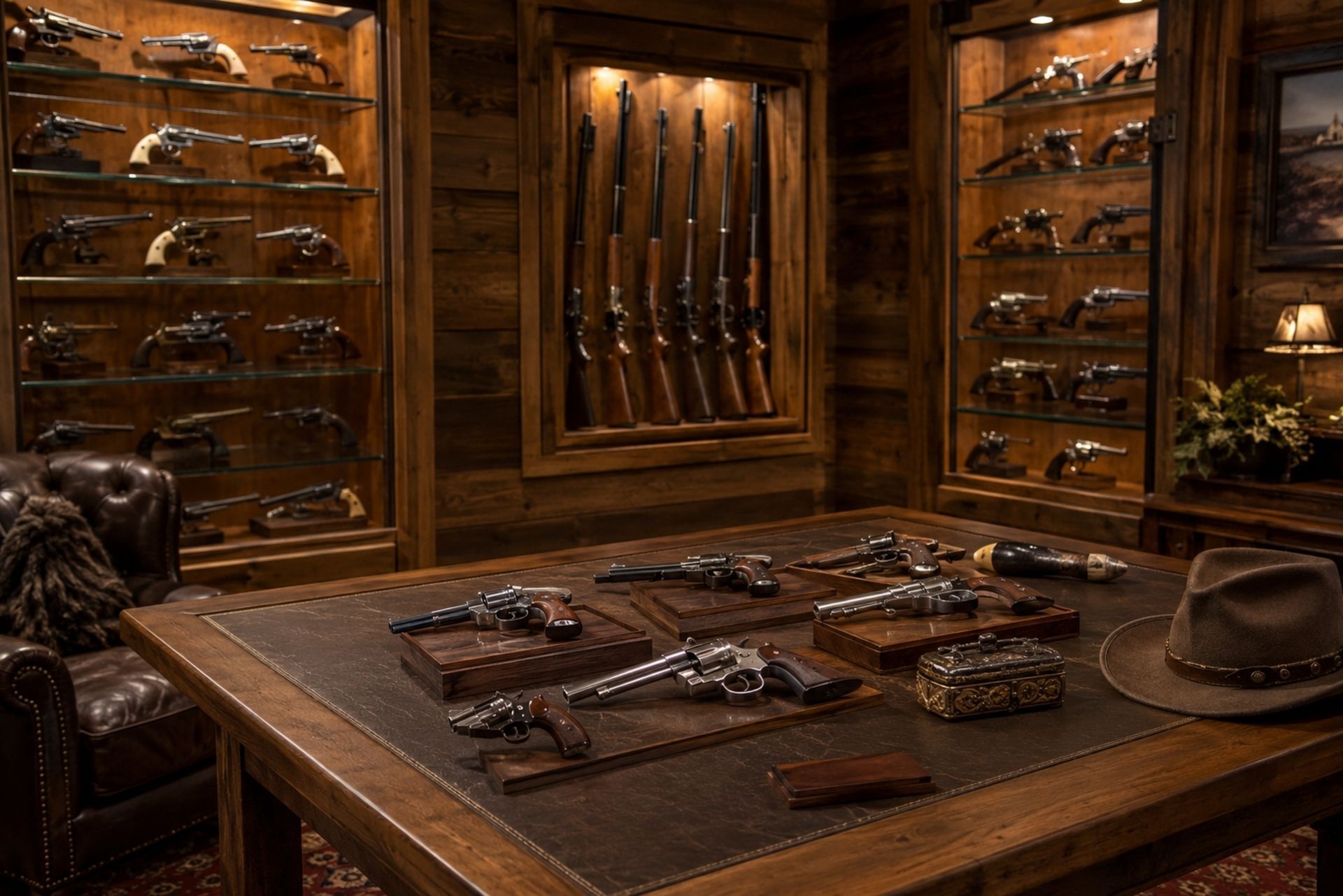
You have three primary paths to insuring a firearms collection in Texas. Each has trade-offs depending on the size, value, and nature of your holdings.
Scheduled Personal Property Endorsements
A scheduled endorsement, sometimes called a rider or floater, attaches to your existing homeowners or renters policy. You list each firearm individually with its appraised value, and the insurer agrees to cover that specific amount. This approach works well for collectors with five to fifteen high-value pieces.
The catch is that every new acquisition needs to be added to the schedule, usually within 30 days of purchase. If you forget to add a $12,000 Winchester Model 21 you picked up at auction, it falls back under the base policy's meager sublimit. Scheduled endorsements also require individual appraisals, which adds cost and administrative effort.
Standalone Specialized Firearms Policies
For collections valued above $50,000, standalone policies from specialty insurers often make more sense. These policies are designed specifically for firearms and typically offer broader coverage, including protection against accidental damage, theft without signs of forced entry, and sometimes even mechanical breakdown during use.
Premiums for standalone policies generally run between $1 and $2 per $100 of insured value annually. A $100,000 collection might cost $1,000 to $2,000 per year to insure, depending on your storage setup, security measures, and claims history. That's a small price relative to the risk.
Blanket Coverage for Large Collections
Blanket coverage insures your entire collection under a single aggregate limit rather than listing each piece. This is common for collectors with hundreds of firearms where scheduling every item would be impractical. You might carry a blanket policy for $500,000 that covers everything in your vault.
One thing to keep in mind: blanket policies often cap the per-item payout at a percentage of the total, say 10%. On a $500,000 blanket policy, no single firearm would pay out more than $50,000 unless it's separately scheduled. If you own a few standout pieces worth more than that threshold, you'll want a hybrid approach that combines blanket coverage with individual scheduling for your most valuable items.
Valuing Your Collection for Texas Underwriters
Getting the valuation right is the single most important step in insuring your collection. An inaccurate valuation, whether too high or too low, creates problems at claims time.
Actual Cash Value vs. Replacement Cost
Actual cash value (ACV) pays what your firearm is worth today, accounting for depreciation. Replacement cost pays what it would take to buy a comparable item at current market prices. For collectible firearms, ACV can be misleading because many pieces appreciate rather than depreciate.
The best option for collectors is agreed value coverage. Under this arrangement, you and the insurer agree on a dollar amount for each scheduled firearm at the time the policy is written. If a loss occurs, you receive that agreed amount with no depreciation deduction and no haggling. This eliminates the nasty surprises that come with ACV settlements on rare pieces.
The Role of Professional Appraisals
Professional appraisals are the backbone of any serious collection policy. A qualified firearms appraiser will document each piece's make, model, serial number, condition grade, provenance, and current fair market value. You should have your collection reappraised every two to three years, or whenever the market shifts significantly.
Texas has several certified appraisers who specialize in firearms, particularly in Dallas, Houston, San Antonio, and Austin. Keep copies of all appraisal documents in a fireproof safe and in cloud storage. If a total loss occurs, these records are what stand between you and a lowball settlement.
Specific Protections for Texas Gun Owners
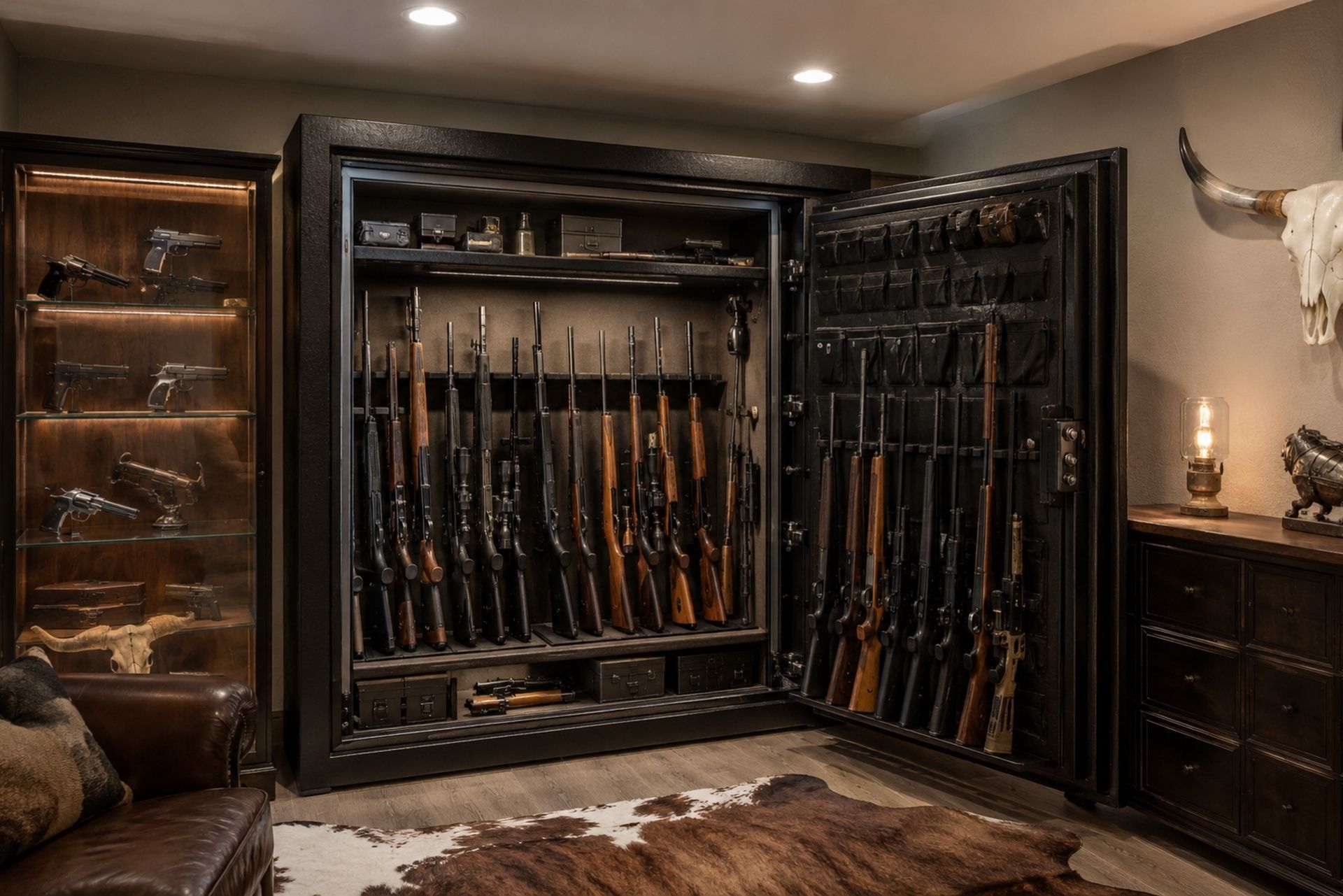
Texas collectors face specific risks that generic national policies sometimes overlook. From Gulf Coast hurricanes to long-distance drives for gun shows, your coverage needs to account for local realities.
Coverage for Accessories, Optics, and Ammo
A high-end collection isn't just firearms. Suppressors, premium optics like Nightforce or Schmidt & Bender scopes, custom holsters, and stockpiled ammunition all represent real money. Some policies bundle accessories with the firearm they're attached to, while others require separate scheduling.
| Coverage Feature | Standard Homeowners | Scheduled Endorsement | Standalone Firearms Policy |
|---|---|---|---|
| Per-item limit | $2,500-$5,000 total | Agreed value per item | Agreed value per item |
| Accessories/optics | Rarely covered separately | Varies by insurer | Typically included |
| Ammunition | Usually excluded | Varies by insurer | Often covered up to a sublimit |
| Mysterious disappearance | Not covered | Sometimes covered | Usually covered |
| Transit/exhibition | Not covered | Rarely covered | Commonly included |
Transit and Exhibition Protection
If you attend gun shows in Fort Worth, Waco, or Fredericksburg, your firearms leave the security of your home and enter a higher-risk environment. Transit coverage protects your collection while it's being transported in your vehicle, displayed at exhibitions, or temporarily stored at a show venue.
Specialized policies typically extend protection beyond your primary residence automatically. Standard homeowners policies do not. If you regularly move firearms for shows, appraisals, or restoration work, confirm that your policy covers off-premises losses without requiring prior notification for each trip.
Texas Legal Considerations and Documentation
Texas firearms law is relatively permissive, but insurance compliance still demands careful record-keeping. Your ability to recover after a loss depends heavily on how well you've documented your collection before disaster strikes.
Maintaining a Secure Digital Inventory
Every collector should maintain a digital inventory using dedicated software or a detailed spreadsheet. Each entry should include the firearm's make, model, caliber, serial number, purchase date, purchase price, current appraised value, and high-resolution photographs from multiple angles. Video walkthroughs of your storage area add another layer of proof.
Store this inventory in at least two locations: encrypted cloud storage and a physical copy in a separate location from the collection itself, such as a bank safe deposit box. If a fire destroys your home and your only inventory list was in the same building, you'll face an uphill battle with your insurer.
Self-Defense Liability vs. Property Damage
Property insurance and self-defense liability insurance are two entirely different products. Your collection policy covers damage to or loss of your firearms. It does not cover legal costs or civil liability arising from a defensive shooting incident.
Texas has strong stand-your-ground and castle doctrine protections, but civil lawsuits can still follow a justified shooting. Separate self-defense liability coverage, offered through organizations and standalone policies, handles legal defense costs, bail bonds, and civil damages. Don't confuse the two, and don't assume your firearms policy provides any liability protection.
Steps to Secure Your Collection Policy
Getting your collection properly insured follows a straightforward process, but skipping steps leads to coverage gaps.
- Conduct a full physical inventory of every firearm, accessory, and related item you own.
- Hire a certified firearms appraiser to document condition and current market value for pieces worth over $1,000 individually.
- Photograph and video-record your collection and storage setup, including safes, alarm systems, and climate control measures.
- Contact at least three insurers who specialize in firearms coverage and request quotes based on your inventory and appraisal documents.
- Compare policies on agreed value terms, mysterious disappearance coverage, transit protection, and per-item sublimits.
- Review your policy annually and update it within 30 days of any new acquisition or significant market change.
Investing in proper storage also reduces premiums. A UL-rated gun safe, a monitored alarm system, and stable climate control (preventing rust and wood warping in Texas humidity) all signal lower risk to underwriters. Some insurers offer discounts of 5% to 15% for verified security measures.
The right policy protects more than metal and wood. It protects years of careful acquisition, family history, and financial investment. If you haven't reviewed your firearms coverage recently, now is the time to pull out your policy, compare it against your actual collection value, and close the gaps before Texas weather, theft, or an accident does it for you.
FAQ
How much does it cost to insure a gun collection in Texas? Expect to pay roughly $1 to $2 per $100 of insured value annually for a standalone firearms policy. A $50,000 collection typically costs $500 to $1,000 per year, though premiums vary based on security measures and claims history.
Does my homeowners insurance cover my guns? It covers them, but poorly. Most Texas homeowners policies cap firearms at $2,500 to $5,000 total and exclude common risks like mysterious disappearance and transit losses.
How often should I get my collection appraised? Every two to three years is the standard recommendation. If the firearms market experiences a significant shift or you acquire a particularly rare piece, get an updated appraisal sooner.
Are NFA items like suppressors and short-barreled rifles covered? Yes, most specialized firearms policies cover NFA items as long as they're properly registered and included on your schedule. Confirm this with your insurer before assuming coverage.
Does gun collection insurance cover theft from my vehicle?
Standalone firearms policies typically cover theft from a locked vehicle, though some require the firearms to have been stored out of plain sight. Check your policy's specific terms on vehicle theft.
About The Author: Aaron Husman
As COO of The Phoenix Insurance, I’m focused on building lasting client relationships and delivering insurance solutions that make protection simple and effective. With years of experience in commercial and personal insurance, I take pride in helping individuals and businesses find coverage that brings confidence and peace of mind.
customer reviews
See What Our Clients Say About Us
Types of Auto Insurance
Insurance For Car Collectors By Car Collectors
Our team specializes in providing tailored insurance coverage for car collectors. Whether you own a rare classic, an exotic beauty, or a powerful muscle car, we understand the unique needs of your collection and work to ensure it’s protected with the care and expertise it deserves.


Contact us for better help and services. Explore all types of car insurance
FREQUENTLY ASKED QUESTIONS
At The Phoenix Insurance, we’re committed to answering your most pressing questions to ensure you feel confident about your coverage. From understanding the benefits of working with an independent agency to the specific insurance options we offer for Texas residents, we’ve got you covered.
What makes The Phoenix Insurance different from other insurance providers?
The Phoenix Insurance is an independent agency, meaning we work with multiple insurance carriers to find the best coverage and rates for your unique needs. Our proactive support and commitment to personalized service set us apart from other providers.
Why should I choose an independent insurance agency in Texas?
Independent agencies like The Phoenix Insurance offer more flexibility and personalized service than large, single-carrier companies. We compare coverage options from top-rated carriers to ensure you get the most value for your money.
Does The Phoenix Insurance provide coverage for real estate investors?
Yes, we specialize in insuring real estate investments, including single-family homes, apartments, commercial buildings, and industrial properties. Our team has extensive experience protecting real estate assets across Texas.
How does The Phoenix Insurance handle claims?
We guide clients through the entire claims process, working directly with the insurance carrier to ensure quick and fair resolutions. Our team is dedicated to providing the support you need when it matters most.
What types of insurance does The Phoenix Insurance offer for Texas residents?
We offer a wide range of personal and business insurance options, including home, auto, umbrella, and recreational vehicle coverage for individuals, as well as liability and property insurance for businesses and real estate investors.
Insurance Knowledge. Stories. Tips.
Our Latest Blogs
Explore expert tips, industry insights, and helpful resources from The Phoenix Insurance to stay informed and make confident decisions about your coverage.



Contact Us