

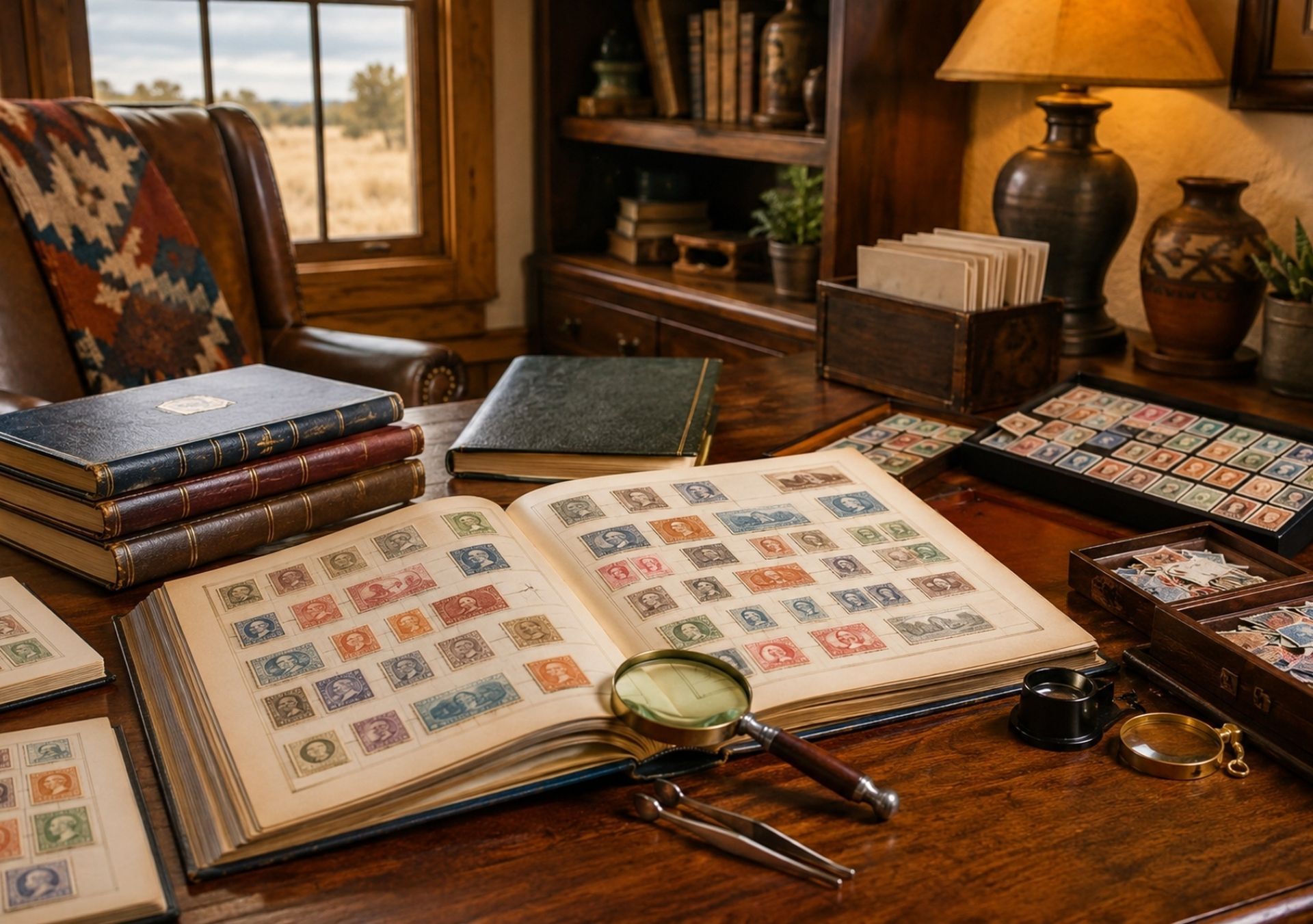
A rare 1918 Inverted Jenny tucked inside a climate-controlled album in your Houston study might be worth more than the car in your garage. Yet most Texas collectors don't realize how little protection their existing insurance actually provides. Standard homeowners policies in the state typically cap coverage for stamps and
valuable papers at just $500, a limit that hasn't kept pace with the booming philatelic market. If you're building or maintaining a serious collection anywhere from Dallas to the Rio Grande Valley, understanding your insurance options isn't optional; it's essential. This stamp collection insurance coverage guide for Texas collectors will walk you through the specific policy types, valuation methods, and claim strategies that keep your investment safe against the state's unique risks.
Understanding Why Texas Philatelists Need Specialized Insurance
Texas is home to one of the country's most active philatelic communities, with stamp clubs in Austin, San Antonio, Fort Worth, and dozens of smaller cities. Collections here range from modest accumulations worth a few thousand dollars to six-figure holdings of rare U.S. and Confederate-era issues. The financial exposure is real, and generic insurance simply isn't built to handle it.
Limitations of Standard Texas Homeowners Policies
Your homeowners or renters policy treats stamps the same way it treats old newspapers. Most Texas policies cap collectible paper items at around $500, which barely covers a single decent 19th-century U.S. cover. That's not a typo. Even if your collection is worth $50,000, your insurer's obligation stops at that tiny sublimit unless you've arranged additional coverage.
The catch is that many collectors don't discover this gap until they file a claim. Adjusters aren't philatelists; they follow the policy language, and the language rarely works in a collector's favor. Depreciation schedules, vague definitions of "valuable papers," and exclusions for mysterious disappearance all chip away at what you'd actually recover.
Regional Risks: Humidity, Flooding, and Extreme Weather
Texas throws a unique mix of environmental threats at paper-based collectibles. Gulf Coast humidity can trigger foxing, mold, and adhesive deterioration on stamps stored without proper climate control. Inland areas like the Panhandle face extreme temperature swings that stress album bindings and cause paper to expand and contract.
Flooding is the big one. Standard homeowners policies in Texas exclude
flood damage entirely. If your collection sits in a ground-floor study in a Houston suburb, a single heavy rain event could destroy decades of careful acquisition. Tornadoes, hailstorms, and even wildfire smoke add to the risk profile. These regional hazards make specialized coverage not just smart but necessary for any Texas collector with more than a casual investment in stamps.

Types of Insurance Coverage for Stamp Collections
Choosing the right policy structure depends on the size and value of your collection, how often you move it, and how much administrative effort you're willing to put in.
Scheduled Personal Property Endorsements
A scheduled endorsement (sometimes called a floater or rider) attaches to your existing homeowners policy. You list each high-value stamp or set individually, along with its appraised value. The insurer then covers those specific items up to the stated amount, often on an "agreed value" basis with no deductible.
This approach works well if you own a handful of expensive pieces. One thing to keep in mind: every new acquisition needs to be added to the schedule, and you'll need updated appraisals every two to three years to keep values current.
Stand-Alone Collectible Insurance Policies
For larger collections, a stand-alone policy from a specialty insurer often makes more sense. These policies are designed specifically for collectibles and typically offer broader coverage than a homeowners endorsement. Perils like accidental breakage, mysterious disappearance, and even damage during professional restoration are often included.
Providers such as collectibles-focused underwriters allow you to insure an entire collection under one policy, with options for both scheduled and blanket coverage within the same contract. Premiums tend to run between $1 and $3 per $100 of insured value annually, depending on your location and security measures.
Blanket vs. Itemized Coverage Options
| Feature | Blanket Coverage | Itemized (Scheduled) Coverage |
|---|---|---|
| How it works | Single dollar limit covers entire collection | Each item listed with individual value |
| Best for | Large collections with many moderate-value stamps | Smaller collections with high-value individual pieces |
| Appraisal needs | Overall collection appraisal | Per-item appraisals required |
| Flexibility | Easier to add new items | Must update schedule for each acquisition |
| Claim process | May require proving value after loss | Agreed value speeds up claims |
| Typical premium | Slightly lower per $100 of value | Slightly higher, but more precise payouts |
Blanket coverage is convenient, but it can create disputes during claims if you can't prove the value of individual lost items. Itemized coverage costs a bit more upfront in appraisal fees, yet it pays off with faster, less contentious settlements.
Valuation and Documentation Requirements
Getting your collection properly valued and documented before a loss occurs is the single most important thing you can do to protect your investment.
Determining Market Value vs. Replacement Cost
Market value reflects what a stamp would sell for today between a willing buyer and seller. Replacement cost is what you'd pay to acquire an identical item from a dealer. These two numbers can differ significantly, especially for rare stamps where auction results fluctuate year to year.
Most specialty policies let you choose between actual cash value (market value minus depreciation, though stamps don't depreciate like furniture) and agreed value, where you and the insurer lock in a number at policy inception. Agreed value is almost always the better option for philatelists because it eliminates post-loss arguments about what your 1869 Pictorial Issue was really worth.
The Role of Professional Appraisals in Texas
Texas has several qualified philatelic appraisers, many affiliated with the American Philatelic Society or the American Stamp Dealers Association. A professional appraisal should include detailed descriptions, catalog numbers, condition grades, and current market comparables for each significant item.
Plan on getting your collection reappraised every two to three years, or sooner if the market shifts dramatically. Appraisal fees vary, but expect to pay $100 to $300 per hour for a credentialed expert. That cost pays for itself the moment you need to file a claim.
Maintaining a Digital Inventory and Proof of Ownership
A spreadsheet or dedicated inventory app like stamp collection management software can serve as your first line of defense. Photograph each significant stamp front and back, note the Scott catalog number, condition grade, and purchase price, and store the files in cloud backup.
Keep digital copies of purchase receipts, auction invoices, and certificates of authenticity. If your collection was inherited, document the provenance chain with any available correspondence, prior appraisals, or estate records. This documentation matters because insurers can and do deny claims when collectors can't prove ownership or value.

Specific Protections for Transport and Exhibition
Your stamps face the greatest risk when they leave your home. A dedicated policy should extend protection well beyond your four walls.
Coverage During Transit and Mail Shipping
If you buy, sell, or trade stamps through the mail, standard postal insurance has strict limits and slow claims processes. USPS registered mail offers some protection, but the maximum insurance through USPS is $50,000, and proving a claim for rare stamps can be complicated.
Specialty collectible policies typically include transit coverage as a standard feature. This means your stamps are protected whether you're shipping them to a buyer, sending them to a professional for expertizing, or transporting them in your car to a local club meeting. Verify that your policy covers "wall to wall," meaning from the moment items leave your home until they return.
Exhibition Coverage for Texas Stamp Shows
Texas hosts several major philatelic exhibitions each year, including shows in Houston, Dallas, and San Antonio. Displaying your collection at these events introduces risks like theft, accidental damage from other attendees, and even water damage from venue plumbing failures.
Most standard homeowners endorsements don't cover items displayed at public exhibitions. A stand-alone collectible policy or a specific exhibition rider will. If you exhibit regularly, confirm that your policy covers items while on display, in transit to and from the venue, and during setup and teardown.
Your premium depends on several variables, and Texas-specific factors play a bigger role than you might expect. Collections stored in FEMA-designated flood zones along the Gulf Coast or in tornado-prone areas of North Texas may face higher rates. Insurers also look at your home security setup: a monitored alarm system, a fire-rated safe, and a dedicated climate-controlled storage room with stable HVAC and backup power can all earn discounts.
The total insured value is the primary driver, of course. A $25,000 collection might cost $250 to $500 per year to insure, while a $200,000 collection could run $2,000 to $4,000 annually. Your claims history, deductible choice, and whether you opt for blanket or itemized coverage also affect the final number. Shopping multiple specialty insurers is worth the effort, as rates vary more than you'd think.
Steps to Filing a Successful Claim for Lost or Damaged Stamps
When something goes wrong, speed and documentation determine whether your claim gets paid fairly.
- Report the loss to your insurer within 24 to 72 hours. Most policies have strict notification windows, and waiting too long can jeopardize your claim entirely.
- File a police report if theft is involved. Texas insurers routinely require this before processing theft claims.
- Gather your documentation: inventory records, photographs, appraisals, and purchase receipts. The more organized your records, the faster the adjuster can work.
- Don't dispose of damaged stamps. The insurer may want to inspect them or send them to a third-party expert for evaluation.
- Get an independent appraisal of the damage if you disagree with the insurer's initial assessment. Texas law allows you to hire your own appraiser, and many policies include an appraisal clause for resolving disputes.
- Keep a written log of every conversation with your adjuster, including dates, names, and what was discussed.
The bottom line: a well-documented claim with clear proof of value and ownership gets resolved in weeks. A poorly documented one can drag on for months or end in a denial.
Before You Buy a Policy
Protecting a stamp collection in Texas requires more than a generic homeowners rider. Between Gulf Coast flooding, extreme heat, and the simple reality that most standard policies cap stamp coverage at $500, the gap between what you own and what you'd recover after a loss can be staggering. Whether your collection fits in a single stockbook or fills a climate-controlled vault, the right insurance structure, paired with current appraisals and thorough digital records, turns a potential financial disaster into a manageable inconvenience. Talk to a specialty collectibles insurer, get your appraisals current, and review your policy annually. Your stamps survived decades or even centuries to reach your hands. Make sure they're covered while they're in your care.
FAQ
How much does it cost to insure a stamp collection in Texas? Expect to pay roughly $1 to $3 per $100 of insured value per year. A $50,000 collection might cost $500 to $1,500 annually, depending on your location, security setup, and coverage type.
Does my Texas homeowners policy already cover my stamps? Technically yes, but only up to about $500 for stamps and valuable papers. That sublimit is standard across most Texas homeowners and renters policies, so any serious collection needs additional coverage.
Do I need a professional appraisal to get stamp insurance? For itemized or scheduled coverage, yes. Most insurers require a professional appraisal from a credentialed philatelic appraiser. Blanket coverage may only need an overall collection valuation, but per-item appraisals strengthen your position if you ever file a claim.
Are my stamps covered if I take them to a show in another state? It depends on your policy. Stand-alone collectible policies usually provide coverage anywhere in the U.S. and sometimes internationally. Homeowners endorsements may limit coverage to your primary residence. Always check your policy's territorial limits before traveling with valuable stamps.
What does "mysterious disappearance" mean in a stamp policy? It means a stamp is gone and you can't explain how or when it vanished. Many homeowners policies exclude this, but specialty collectible policies often include it. If a rare stamp simply isn't in your album one day and there's no sign of theft, mysterious disappearance coverage pays the claim.
About The Author: Aaron Husman
As COO of The Phoenix Insurance, I’m focused on building lasting client relationships and delivering insurance solutions that make protection simple and effective. With years of experience in commercial and personal insurance, I take pride in helping individuals and businesses find coverage that brings confidence and peace of mind.
customer reviews
See What Our Clients Say About Us
Types of Auto Insurance
Insurance For Car Collectors By Car Collectors
Our team specializes in providing tailored insurance coverage for car collectors. Whether you own a rare classic, an exotic beauty, or a powerful muscle car, we understand the unique needs of your collection and work to ensure it’s protected with the care and expertise it deserves.


Contact us for better help and services. Explore all types of car insurance
FREQUENTLY ASKED QUESTIONS
At The Phoenix Insurance, we’re committed to answering your most pressing questions to ensure you feel confident about your coverage. From understanding the benefits of working with an independent agency to the specific insurance options we offer for Texas residents, we’ve got you covered.
What makes The Phoenix Insurance different from other insurance providers?
The Phoenix Insurance is an independent agency, meaning we work with multiple insurance carriers to find the best coverage and rates for your unique needs. Our proactive support and commitment to personalized service set us apart from other providers.
Why should I choose an independent insurance agency in Texas?
Independent agencies like The Phoenix Insurance offer more flexibility and personalized service than large, single-carrier companies. We compare coverage options from top-rated carriers to ensure you get the most value for your money.
Does The Phoenix Insurance provide coverage for real estate investors?
Yes, we specialize in insuring real estate investments, including single-family homes, apartments, commercial buildings, and industrial properties. Our team has extensive experience protecting real estate assets across Texas.
How does The Phoenix Insurance handle claims?
We guide clients through the entire claims process, working directly with the insurance carrier to ensure quick and fair resolutions. Our team is dedicated to providing the support you need when it matters most.
What types of insurance does The Phoenix Insurance offer for Texas residents?
We offer a wide range of personal and business insurance options, including home, auto, umbrella, and recreational vehicle coverage for individuals, as well as liability and property insurance for businesses and real estate investors.
Insurance Knowledge. Stories. Tips.
Our Latest Blogs
Explore expert tips, industry insights, and helpful resources from The Phoenix Insurance to stay informed and make confident decisions about your coverage.



Contact Us