

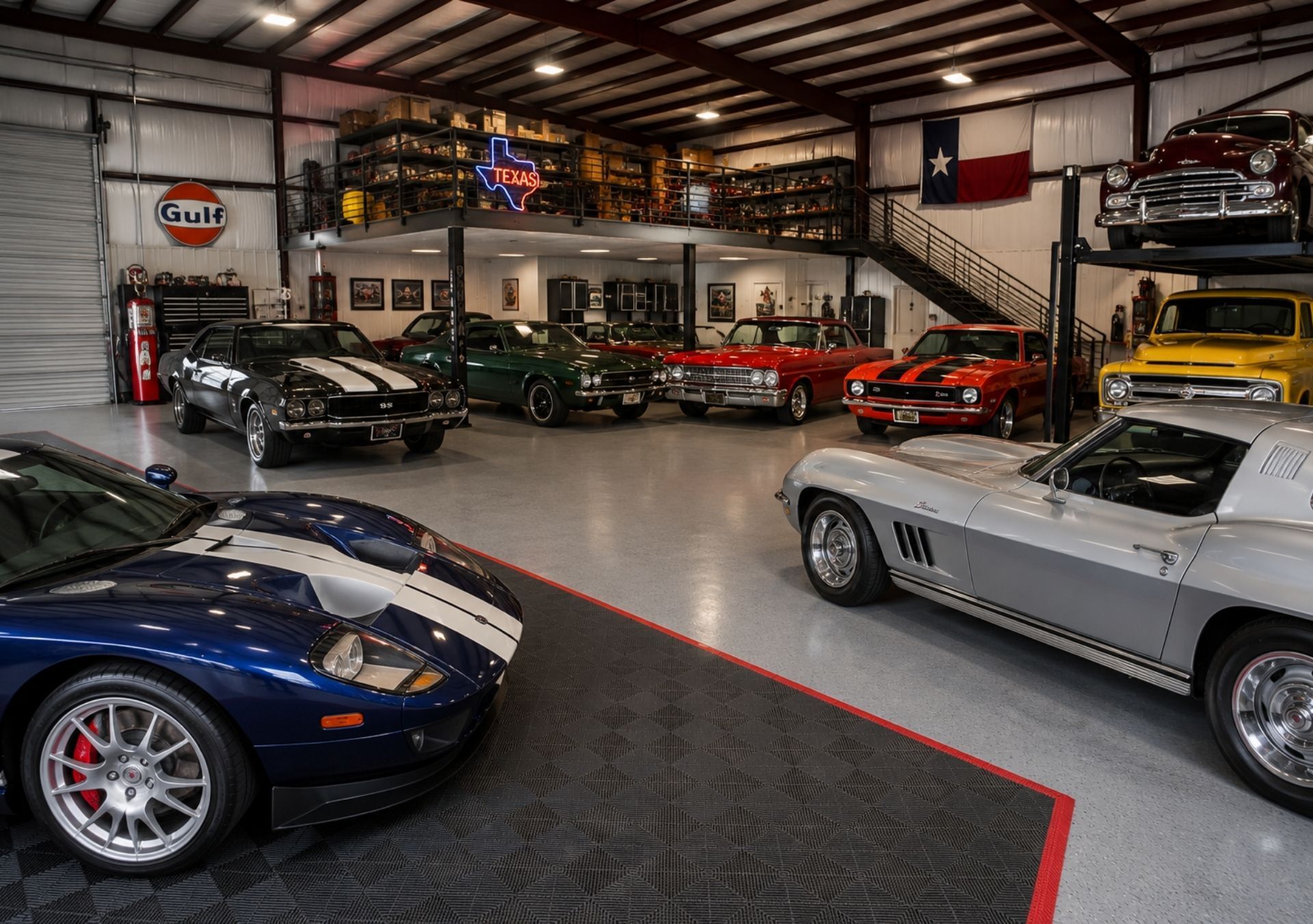
Owning a collection of classic, exotic, or vintage cars in Texas comes with a unique set of risks that a standard auto policy was never designed to handle. From hailstorms tearing across the Dallas-Fort Worth metroplex to the climbing values of rare muscle cars, protecting a multi-vehicle collection requires a different kind of coverage. If you've got three or more collector vehicles sitting in your garage, understanding how collection policies work and what Texas law requires is the difference between full protection and a costly gap you won't discover until it's too late.
Texas has been the hail damage capital of the U.S. for eleven straight years, which means comprehensive coverage isn't optional here. A single spring storm can cause tens of thousands of dollars in damage to exposed vehicles. That reality alone makes insuring a multi-car collection in Texas a topic worth taking seriously, whether you own a trio of restored Corvettes or a mixed fleet of European exotics and American classics.
This guide breaks down the key differences between standard and
collector car policies, explains how bundled collection coverage works, compares policy features side by side, and covers the Texas-specific rules you'll need to follow.
The Difference Between Standard and Collector Car Policies in Texas
A standard auto insurance policy treats your car like a depreciating asset. The insurer looks at the year, make, model, and mileage, then assigns a value based on what the open market says a similar vehicle is worth today. For a daily driver, that approach makes sense. For a 1969 Shelby GT500 you've spent $180,000 restoring, it's a disaster waiting to happen.
Collector car policies flip the script. They're built for vehicles that appreciate or hold stable value over time, and they account for the specialized nature of collector ownership. The catch is that they come with restrictions on how and when you can drive the vehicle, which is the trade-off for lower premiums and better value protection.
Texas-specific classic car insurance options reflect these differences clearly, with specialized carriers offering coverage structures that standard insurers simply don't provide.
Stated Value vs. Agreed Value Coverage
This is the single most important distinction between a standard and collector policy. Under a standard policy, your insurer pays out "actual cash value" (ACV) at the time of a total loss. ACV factors in depreciation, market conditions, and wear. For a collector car, that calculation almost always undervalues the vehicle.
Agreed value coverage works differently. You and the insurer settle on a specific dollar amount when the policy is written, typically supported by a professional appraisal. If the car is totaled, you receive that full agreed amount with no depreciation deduction and no negotiation. A stated value policy, on the other hand, sets a ceiling but doesn't guarantee a payout at that number. The insurer can still apply depreciation within that cap.
For any vehicle worth more than $50,000, agreed value is the only option that makes financial sense. Get your vehicles appraised every two to three years to keep the agreed value current with market fluctuations.
Usage Restrictions and Mileage Limitations
Collector policies keep premiums low partly because they assume limited use. Most policies cap annual mileage between 2,500 and 7,500 miles per vehicle. You can typically drive to car shows, club events, occasional pleasure cruises, and maintenance appointments, but daily commuting is off the table.
Texas collectors who drive their cars to events in Houston, San Antonio, or Austin should verify that transit coverage extends to those trips. Some policies exclude coverage if the vehicle is more than a certain distance from its primary storage location. One thing to keep in mind: if you exceed the mileage cap without notifying your insurer, a claim could be denied entirely.
How Multi-Car Collection Policies Work
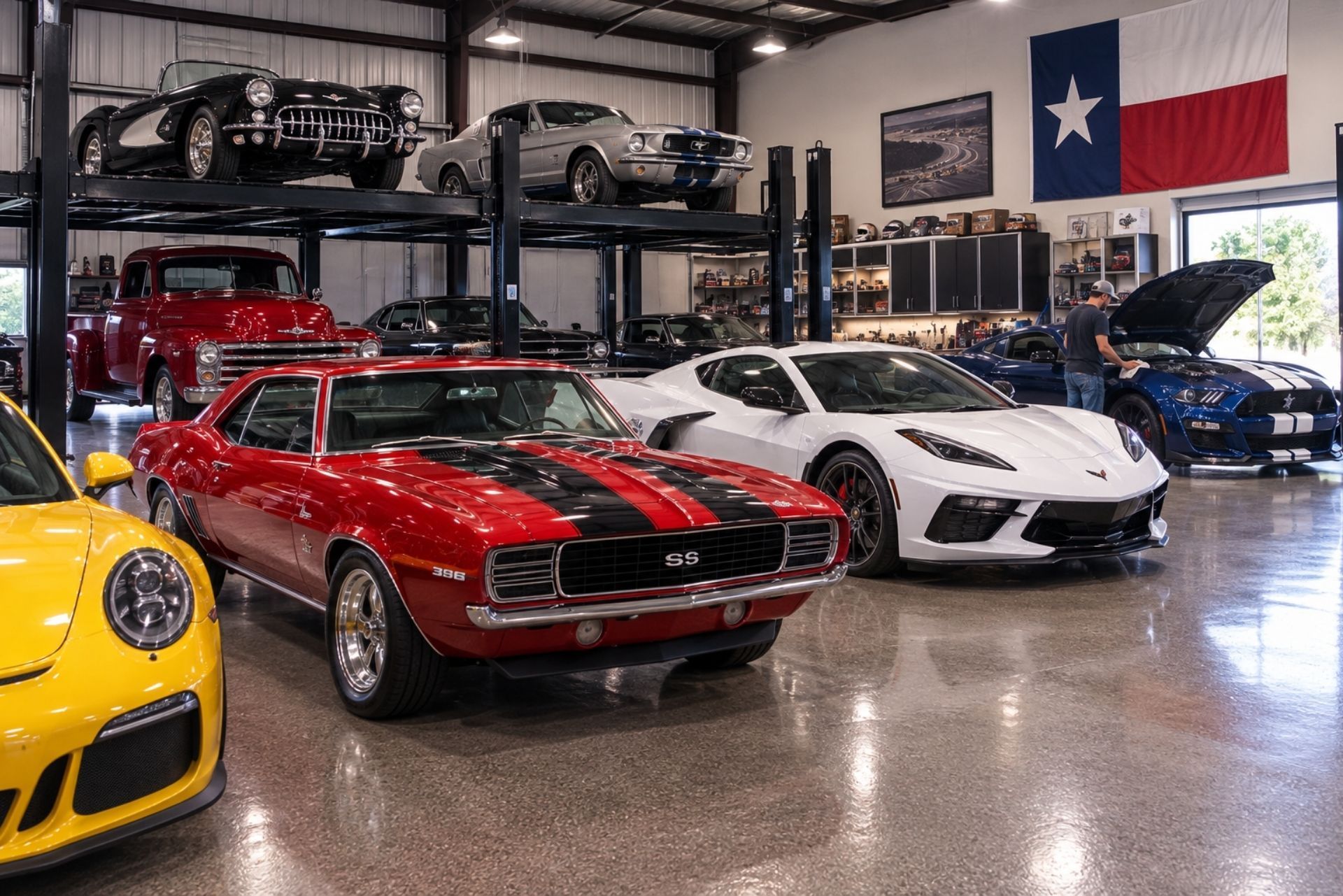
Instead of writing separate policies for each vehicle, a collection policy bundles multiple cars under a single contract. Most insurers require a minimum of three to five vehicles to qualify, though some specialty carriers will start at two. The policy covers all listed vehicles under one set of terms, one renewal date, and one premium.
This bundled approach simplifies administration and often reduces your total cost compared to insuring each car individually. Multi-car insurance discounts can range from 10% to 25% depending on the carrier and the number of vehicles on the policy.
Tiered Pricing and Fleet Discounts
Collection policies typically use tiered pricing that rewards you for insuring more vehicles. The per-vehicle cost drops as the total number of cars on the policy increases. A five-car collection might see a 15% per-vehicle discount, while a ten-car collection could push that closer to 25%.
Here's what that means for you in real dollars: if insuring a single collector car costs $800 per year, a ten-car collection might average $600 per vehicle, saving you $2,000 annually. Some carriers also offer loyalty discounts for claim-free years, which can stack on top of the fleet discount.
The premium for each vehicle still depends on its agreed value, storage location, and your driving history. A $2 million Ferrari 250 GTO and a $35,000 restored Mustang won't carry the same rate, but both benefit from the collection discount.
Automatic Coverage for New Acquisitions
One of the most practical features of a collection policy is automatic coverage for newly acquired vehicles. Most policies provide a window of 30 to 90 days during which any new purchase is covered under your existing policy terms. This gives you time to get the vehicle appraised, notify your insurer, and formally add it to the policy.
Without this feature, you'd need to arrange coverage before every purchase, which is impractical at auctions or private sales where deals close fast. If you're buying at Mecum or Barrett-Jackson events in Texas, that automatic window is essential. Just don't forget to formally add the vehicle before the window closes, because coverage disappears if you miss the deadline.
Comparing Policy Features: Standard vs. Collection Insurance
A side-by-side comparison makes the differences between standard auto and collection policies concrete. Here's how the two stack up across the features that matter most to Texas collectors:
| Feature | Standard Auto Policy | Collection/Collector Policy |
|---|---|---|
| Valuation Method | Actual cash value (depreciated) | Agreed value (guaranteed payout) |
| Mileage Limits | None | 2,500 to 7,500 miles/year typical |
| Premium Cost | Higher per vehicle for high-value cars | Lower, with fleet discounts available |
| New Acquisition Coverage | Not included | 30 to 90 days automatic |
| Spare Parts Coverage | Not included | Often included up to $5,000+ |
| Transit/Show Coverage | Limited | Included for shows, events, transport |
| Choice of Repair Shop | Insurer-approved network | Owner's choice, including specialists |
| Eligibility | Any vehicle | Typically 15+ years old or limited production |
The choice of repair shop is a bigger deal than it sounds. Standard policies route you to their approved body shops, which may have no experience with vintage paint codes, hand-formed panels, or period-correct restoration work. A collection policy lets you choose the specialist who knows your car.
Texas-Specific Requirements for High-Value Collections
Texas law applies the same baseline insurance requirements to collector vehicles as it does to daily drivers, but the practical demands of protecting a high-value collection go well beyond minimums.
Minimum Liability and Uninsured Motorist Laws
Texas requires minimum liability coverage of 30/60/25: that's $30,000 per person for bodily injury, $60,000 per accident, and $25,000 for property damage. The state also mandates uninsured/underinsured motorist coverage unless you specifically reject it in writing.
For a collection worth $500,000 or more, those minimums are dangerously low. If you're at fault in an accident driving your collector car and cause $100,000 in injuries, you're personally liable for the $70,000 gap above your coverage limit. Most collection policy holders carry liability limits of $100,000/$300,000/$100,000 or higher, and an umbrella policy on top of that is a smart move.
Safe Storage and Garage Requirements
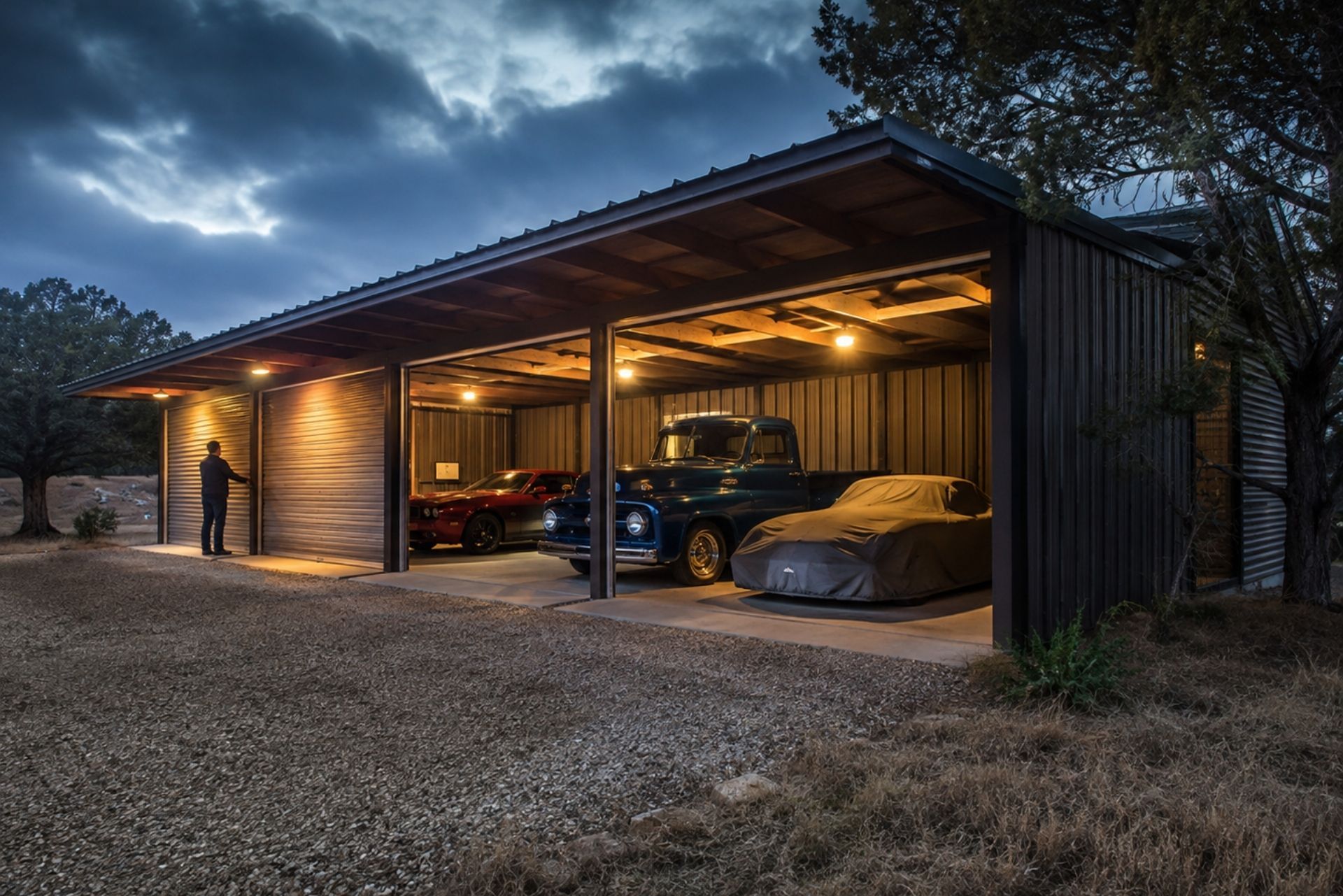
Most collector car insurers in Texas require that vehicles be stored in a fully enclosed, locked garage or climate-controlled facility. This isn't just about theft. Texas heat regularly exceeds 100 degrees in summer, and humidity along the Gulf Coast accelerates corrosion on chrome, rubber seals, and unprotected metal.
A proper storage setup includes climate control with backup power, a monitored security system, and fire suppression. Some insurers offer premium discounts for facilities that meet specific security standards. If you store vehicles at a separate location from your home, make sure that address is listed on the policy. A claim filed for a vehicle stored at an undisclosed location can be denied.
Maintaining a digital inventory with photographs, appraisal documents, and title records for each vehicle strengthens your position if you ever need to file a claim.
Periodic policy reviews help ensure your coverage keeps pace with rising vehicle values.
Common Questions About Insuring Your Collection
Can I insure modern supercars on a collection policy? Yes. Many specialty insurers now cover limited-production modern vehicles like the Porsche 918, McLaren P1, or Ford GT alongside vintage cars, as long as they meet eligibility criteria for limited production or appreciating value.
What happens if my car appreciates beyond its agreed value? You'll only receive the agreed value on the policy. That's why appraisals every two to three years are critical, especially for marques with rapidly climbing values like air-cooled Porsches or early Broncos.
Do I need a separate daily driver to qualify? Most collection insurers require that you have a regular-use vehicle insured under a standard policy. The collector policy is designed for vehicles that aren't your primary transportation.
Are cars under restoration covered? Some policies cover vehicles mid-restoration, but coverage may be limited to the current invested value rather than the projected completed value. Confirm this with your insurer before starting major work.
Does my collection policy cover me at car shows across state lines? Most do, but verify the geographic scope. Some policies restrict coverage to a specific radius from your storage address, while others provide nationwide or even international coverage for events.
What's the minimum number of cars needed for a collection policy? Most carriers require three to five vehicles, though a few specialty insurers will write collection policies for as few as two.
Making the Right Choice for Your Vehicles
Protecting a multi-car collection in Texas requires more than just meeting the state's minimum insurance requirements. The combination of extreme weather, high vehicle values, and specialized repair needs makes a dedicated collection policy the clear choice over stacking individual standard policies.
Start by getting current appraisals on every vehicle in your collection. Compare at least three specialty insurers, paying close attention to agreed value terms, mileage caps, transit coverage, and storage requirements. Ask specifically about automatic acquisition coverage if you're actively buying, and confirm that your storage setup meets the insurer's standards before binding the policy.
The right collection policy should feel like it was designed around how you actually own and enjoy your cars, not like a set of restrictions bolted onto a standard auto policy. Take the time to match your coverage to your collection, and you'll have the confidence to drive, show, and grow your fleet without worrying about what happens if something goes wrong.
About The Author: Aaron Husman
As COO of The Phoenix Insurance, I’m focused on building lasting client relationships and delivering insurance solutions that make protection simple and effective. With years of experience in commercial and personal insurance, I take pride in helping individuals and businesses find coverage that brings confidence and peace of mind.
customer reviews
See What Our Clients Say About Us
Types of Auto Insurance
Insurance For Car Collectors By Car Collectors
Our team specializes in providing tailored insurance coverage for car collectors. Whether you own a rare classic, an exotic beauty, or a powerful muscle car, we understand the unique needs of your collection and work to ensure it’s protected with the care and expertise it deserves.


Contact us for better help and services. Explore all types of car insurance
FREQUENTLY ASKED QUESTIONS
At The Phoenix Insurance, we’re committed to answering your most pressing questions to ensure you feel confident about your coverage. From understanding the benefits of working with an independent agency to the specific insurance options we offer for Texas residents, we’ve got you covered.
What makes The Phoenix Insurance different from other insurance providers?
The Phoenix Insurance is an independent agency, meaning we work with multiple insurance carriers to find the best coverage and rates for your unique needs. Our proactive support and commitment to personalized service set us apart from other providers.
Why should I choose an independent insurance agency in Texas?
Independent agencies like The Phoenix Insurance offer more flexibility and personalized service than large, single-carrier companies. We compare coverage options from top-rated carriers to ensure you get the most value for your money.
Does The Phoenix Insurance provide coverage for real estate investors?
Yes, we specialize in insuring real estate investments, including single-family homes, apartments, commercial buildings, and industrial properties. Our team has extensive experience protecting real estate assets across Texas.
How does The Phoenix Insurance handle claims?
We guide clients through the entire claims process, working directly with the insurance carrier to ensure quick and fair resolutions. Our team is dedicated to providing the support you need when it matters most.
What types of insurance does The Phoenix Insurance offer for Texas residents?
We offer a wide range of personal and business insurance options, including home, auto, umbrella, and recreational vehicle coverage for individuals, as well as liability and property insurance for businesses and real estate investors.
Insurance Knowledge. Stories. Tips.
Our Latest Blogs
Explore expert tips, industry insights, and helpful resources from The Phoenix Insurance to stay informed and make confident decisions about your coverage.



Contact Us