

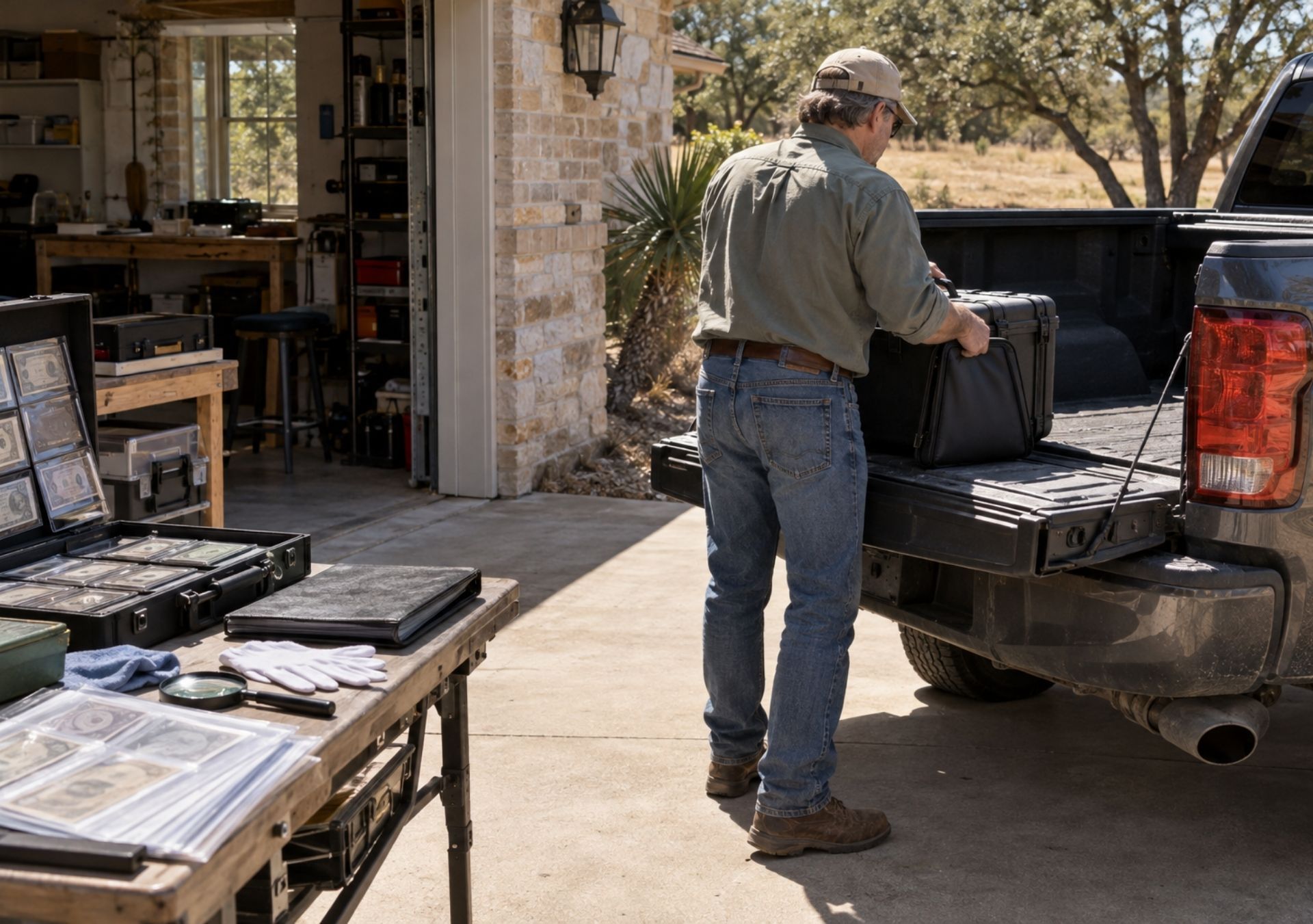
A single Confederate-era $500 note or a crisp Republic of Texas redback can be worth more than most cars sitting in a Texas driveway. Yet many collectors don't realize their homeowners policy treats these irreplaceable pieces of history the same way it treats a stack of twenties in a sock drawer. A standard HO-3 homeowners policy in Texas typically includes a restrictive sub-limit for "money, bank notes, and bullion" that caps total reimbursement at around $200. If your collection is worth $5,000, $50,000, or $500,000, that gap between coverage and actual value should keep you up at night. Proper insurance for rare paper currency in Texas requires attention to valuation methods, transit risks, storage standards, and the right type of scheduled property coverage. Getting any one of those wrong can mean a devastating, unrecoverable loss. This guide walks through each of those pillars so you can protect what you've spent years building.
Protecting Texas Numismatic History: An Overview
Texas has a unique relationship with paper currency. From Republic of Texas "star notes" issued in the 1830s and 1840s to National Bank Notes printed by small-town banks across the Hill Country, the state's monetary history is rich and deeply collectible. The Texas Comptroller's office has even announced 2026 commemorative gold and silver coins, fueling renewed interest in Texas numismatic heritage.
That growing interest means rising values, and rising values demand better protection. A note from the First National Bank of Galveston that sold for $3,000 a decade ago might fetch $8,000 or more today. Without insurance that reflects current market pricing, you're self-insuring the difference.
The catch is that insuring paper currency isn't like
insuring jewelry or fine art. Currency is fragile, highly portable, and difficult to identify once stolen. Insurers know this, and their
underwriting requirements reflect it. Understanding what they expect from you, and what you should expect from them, is the foundation of smart collection protection in Texas.
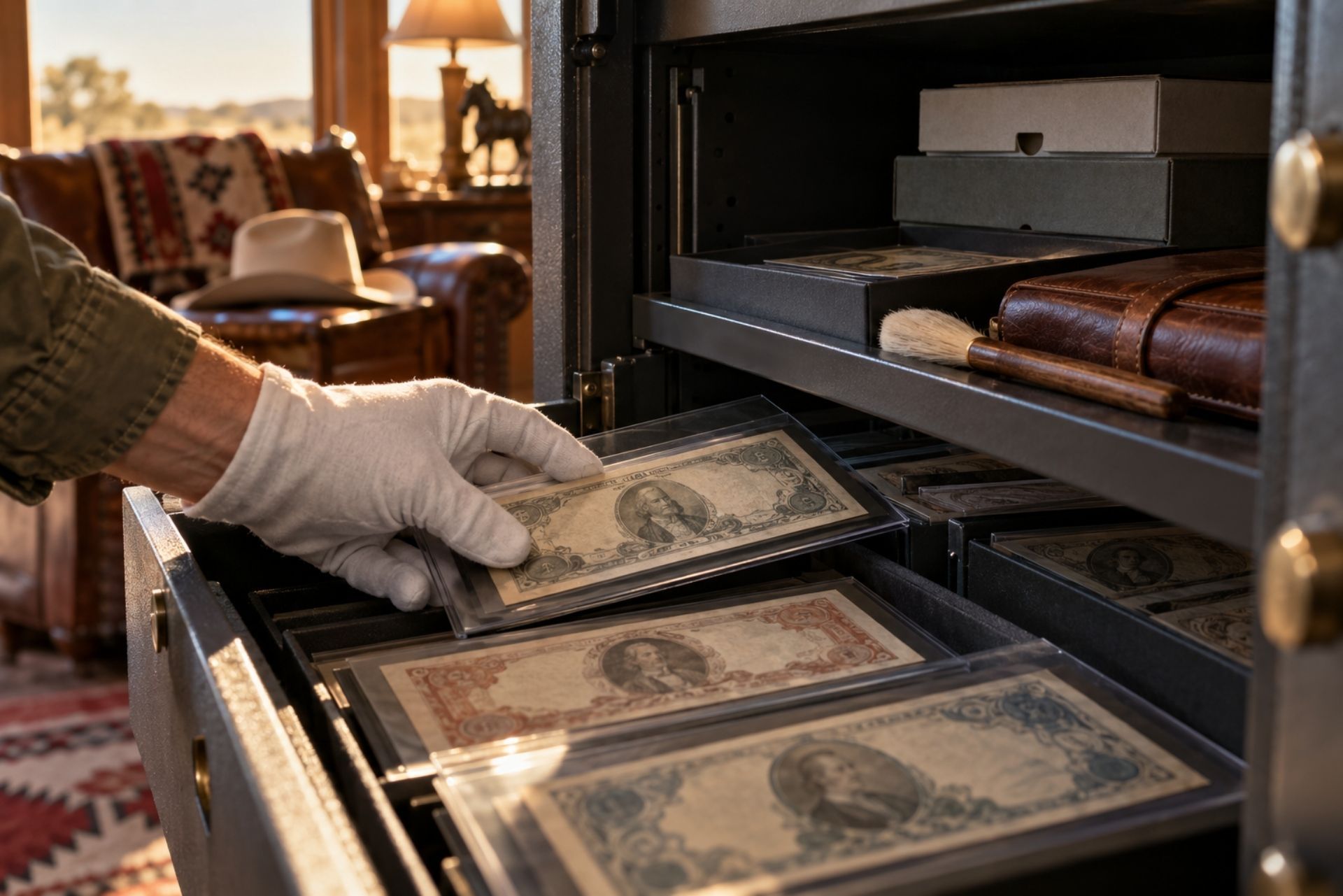
Establishing Accurate Valuation for Rare Paper Currency
Valuation is where every insurance conversation starts, and where most mistakes happen. Insurers won't accept your personal estimate of what a note is worth. They need documented, defensible numbers from recognized authorities.
For rare currency, "agreed value" policies are the gold standard. Under an agreed value arrangement, you and the insurer settle on a specific dollar amount for each item at the time the policy is written. If a covered loss occurs, that's the payout, no haggling, no depreciation. The alternative, actual cash value coverage, factors in depreciation and can leave you with a fraction of what your note would sell for at auction.
You should maintain a digital inventory with high-resolution photographs of both sides of every note, along with any grading certificates. Collection management software makes this process far easier than spreadsheets, and many insurers now expect digital documentation as part of the application.
The Role of Professional Grading Services (PMG and PCGS)
Paper Money Guaranty (PMG) and Professional Coin Grading Service (PCGS) are the two grading authorities that insurers trust. A PMG-graded note in a tamper-evident holder carries a specific grade (say, PMG 65 EPQ) that directly correlates to market value. Without third-party grading, you're relying on subjective assessments that underwriters may discount or reject.
Grading fees typically run $20 to $150 per note depending on value tier and turnaround speed. For a collection worth five or six figures, that cost is a rounding error compared to the coverage certainty it provides. Graded notes also sell for premiums over raw notes, so the investment pays for itself even outside the insurance context.
Market Volatility and Periodic Appraisal Updates
Rare currency markets shift. A note graded PMG 64 might jump 30% in value after a comparable piece sells at Heritage Auctions for a record price. On the flip side, a market correction could reduce values. Either scenario creates a mismatch between your scheduled coverage amount and reality.
Plan on getting a professional appraisal every two to three years, or sooner after a major market event. Some insurers require periodic updates as a policy condition, and failing to provide them can give the company grounds to dispute a claim. Keep copies of every appraisal, and send updated schedules to your insurer promptly.
Scheduled Property Coverage vs. Blanket Policies
The most important decision you'll make is whether to schedule individual items or cover your collection under a blanket policy. Each approach has tradeoffs, and the right choice depends on your collection's size, value distribution, and how frequently it changes.
Scheduled coverage lists each note individually with its own agreed value. You know exactly what you'll receive for each piece. Blanket coverage sets a single total limit for the entire collection, giving you flexibility but less precision on individual payouts.
Comparison of Coverage Options
| Feature | Scheduled Coverage | Blanket Coverage |
|---|---|---|
| Per-item valuation | Yes, each note listed | No, single total limit |
| Claim payout | Agreed value per item | Proportional or ACV |
| Flexibility for new additions | Must update schedule | Covered up to total limit |
| Premium cost | Higher for large collections | Often lower overall |
| Best for | High-value, stable collections | Growing or frequently traded collections |
| Documentation required | Detailed per-item appraisals | Aggregate appraisal |
For collectors with a few anchor pieces worth $10,000 or more each, scheduled coverage is almost always the better choice. If you're actively buying and selling mid-range notes ($500 to $2,000), a blanket policy with a reasonable total limit may be more practical. Some collectors use a hybrid approach: scheduling their top-tier pieces while blanketing the rest.
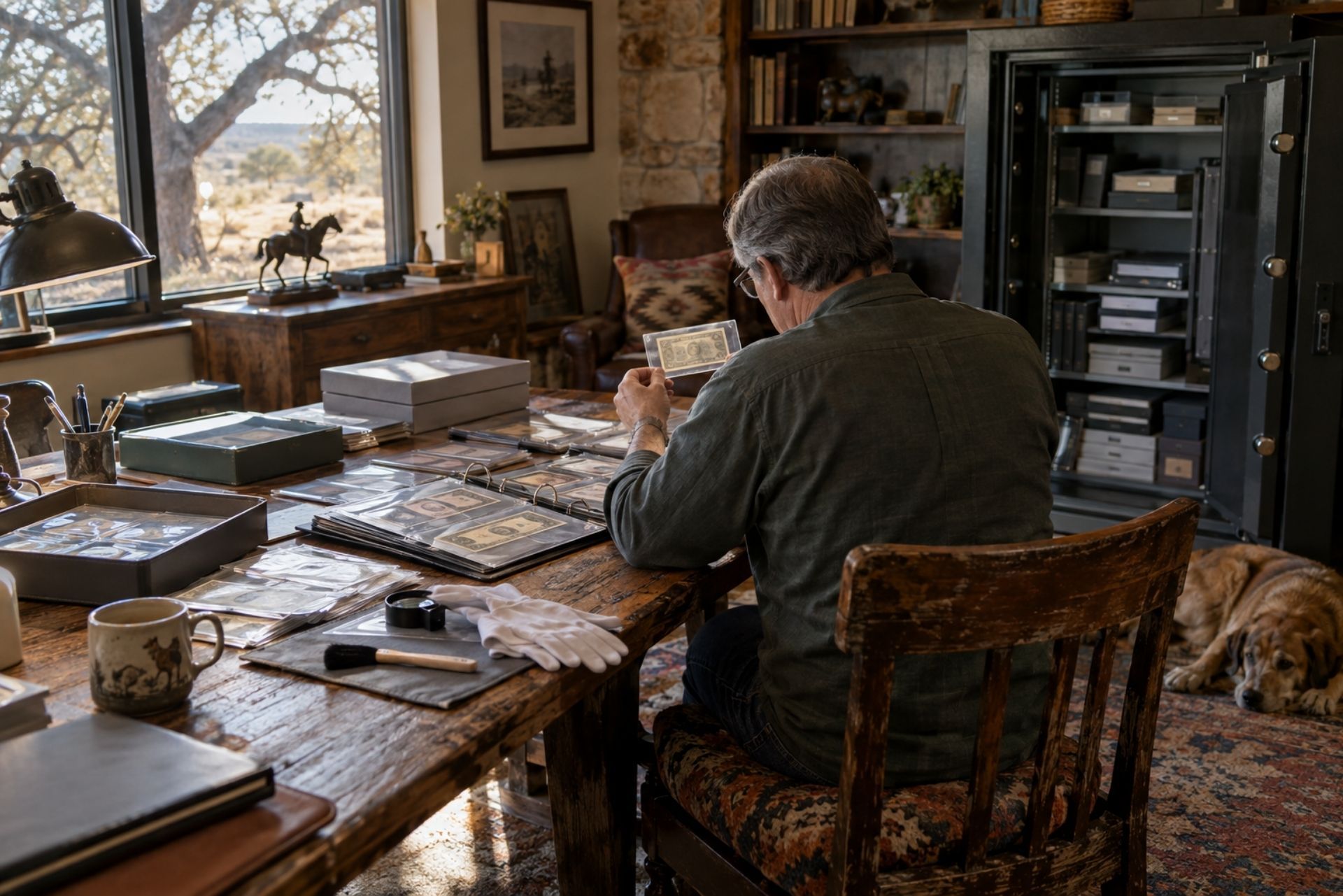
Managing Risks During Transit and Display
Your notes are most vulnerable when they leave your home. Whether you're shipping a note to a buyer, sending it to PMG for grading, or displaying pieces at a show in Fort Worth or Houston, transit creates exposure that your standard coverage may not address.
Many collectors assume their homeowners policy follows their property everywhere. It doesn't, at least not meaningfully. Even if some off-premises coverage exists, it's typically capped at 10% of the dwelling limit and subject to the same restrictive sub-limits for currency.
Shipping Insurance Requirements for High-Value Notes
When shipping notes valued above $1,000, use a carrier that offers declared-value coverage, and make sure the declared amount matches your scheduled value. USPS Registered Mail remains the preferred method among serious collectors because of its chain-of-custody tracking, but private carriers like FedEx and UPS offer declared-value options as well.
One thing to keep in mind: carrier insurance and your collection policy may overlap or conflict. Some collection policies exclude losses that are covered (or should have been covered) by a shipping carrier's insurance. Read both sets of terms carefully, and keep all shipping receipts and tracking documentation. If a package goes missing, you'll need to prove the note was in the shipment.
Coverage for Texas Trade Shows and Exhibitions
Texas hosts major numismatic events throughout the year, including the Texas Numismatic Association's annual convention and regional shows in Dallas, San Antonio, and Austin. Displaying or selling notes at these events requires transit coverage to and from the venue, plus coverage while the items are on-site.
Some specialized collection policies include show coverage automatically, while others require a rider or advance notification. Ask your insurer specifically about
exhibition coverage, including whether theft from a display case is covered and whether there's a per-occurrence limit. The
Texas Bullion Depository offers secure storage for precious metals and coins, but paper currency at a show table needs its own protection plan.
Secure Storage Requirements and Policy Compliance
Insurers don't just want to know what your collection is worth. They want to know where it lives and how it's protected. Storage requirements are written into most collection policies as conditions of coverage. Fail to meet them, and your claim can be denied even if the loss itself would otherwise be covered.
Bank Vaults vs. Home Safes: Insurance Implications
A bank safe deposit box provides strong security, but access is limited to banking hours and the bank's own insurance typically doesn't cover the contents of your box. A home safe rated TL-15 or higher (meaning it resists tool attacks for at least 15 minutes) satisfies most insurer requirements for collections under $100,000.
For collections exceeding $100,000, many underwriters require a TL-30 rated safe that's bolted to a concrete floor and weighs at least 750 pounds. The safe must be in a location that isn't visible from windows or accessible entry points. Some policies specify that the safe must be listed on the policy by manufacturer and model number.
Environmental Controls and Damage Prevention
Texas heat and humidity are silent destroyers of paper currency. A note stored in an un-climate-controlled garage in Houston will deteriorate faster than one kept at 65-70°F with 40-50% relative humidity. Insurers increasingly ask about environmental controls, and some exclude damage caused by improper storage conditions.
Invest in a quality dehumidifier and maintain consistent temperature in your storage area. Mylar holders and acid-free storage materials protect individual notes from handling damage and atmospheric pollutants. If you store notes in a home safe, consider adding silica gel packets to manage moisture inside the safe itself. A backup power source for your HVAC system is worth considering if you live in an area prone to extended power outages, which are
not uncommon across the Texas grid during extreme weather events.
Common Questions About Currency Insurance
Does my homeowners policy cover my rare currency collection? Only up to a very small sub-limit, usually around $200 for money and bank notes. You need a separate scheduled property policy or inland marine floater for meaningful coverage.
How much does rare paper currency insurance cost? Premiums typically run between $1 and $3 per $100 of insured value annually, depending on your storage setup, security measures, and claims history. A $50,000 collection might cost $500 to $1,500 per year to insure.
What happens if a note increases in value after I schedule it? Your payout is limited to the scheduled amount. That's why periodic appraisal updates every two to three years are critical. If a note doubles in value and you don't update your schedule, you'll only receive the original amount.
Are notes covered if they're damaged by flooding? Most collection policies exclude flood damage unless you purchase a separate flood endorsement. Given Texas's flood risk from the Gulf Coast to the Hill Country, this is a coverage gap worth closing.
Do I need to disclose my collection to my home insurer? Yes. Failing to disclose a high-value collection can void coverage entirely if the insurer determines you misrepresented the risk. Full transparency protects you.
Is "mysterious disappearance" covered? Some policies cover mysterious disappearance, meaning a note that simply goes missing without evidence of theft. Others exclude it. If you handle notes frequently or display them, this coverage matters.
Before You Buy a Policy
Insuring a rare paper currency collection in Texas isn't a one-and-done task. It's an ongoing commitment that requires accurate valuations, proper storage, careful transit planning, and the right policy structure. Start by getting your most valuable notes professionally graded and appraised. Document everything digitally with photographs and inventory software. Talk to an insurer who specializes in collectibles, not just a general homeowners agent who'll try to add a rider.
The difference between a $200 payout and a $200,000 payout comes down to the work you do before a loss ever happens. Schedule your high-value pieces individually, maintain your storage to insurer standards, and update your appraisals regularly. Your collection represents Texas history, personal passion, and real financial value. Protect all three.
About The Author: Aaron Husman
As COO of The Phoenix Insurance, I’m focused on building lasting client relationships and delivering insurance solutions that make protection simple and effective. With years of experience in commercial and personal insurance, I take pride in helping individuals and businesses find coverage that brings confidence and peace of mind.
customer reviews
See What Our Clients Say About Us
Types of Auto Insurance
Insurance For Car Collectors By Car Collectors
Our team specializes in providing tailored insurance coverage for car collectors. Whether you own a rare classic, an exotic beauty, or a powerful muscle car, we understand the unique needs of your collection and work to ensure it’s protected with the care and expertise it deserves.


Contact us for better help and services. Explore all types of car insurance
FREQUENTLY ASKED QUESTIONS
At The Phoenix Insurance, we’re committed to answering your most pressing questions to ensure you feel confident about your coverage. From understanding the benefits of working with an independent agency to the specific insurance options we offer for Texas residents, we’ve got you covered.
What makes The Phoenix Insurance different from other insurance providers?
The Phoenix Insurance is an independent agency, meaning we work with multiple insurance carriers to find the best coverage and rates for your unique needs. Our proactive support and commitment to personalized service set us apart from other providers.
Why should I choose an independent insurance agency in Texas?
Independent agencies like The Phoenix Insurance offer more flexibility and personalized service than large, single-carrier companies. We compare coverage options from top-rated carriers to ensure you get the most value for your money.
Does The Phoenix Insurance provide coverage for real estate investors?
Yes, we specialize in insuring real estate investments, including single-family homes, apartments, commercial buildings, and industrial properties. Our team has extensive experience protecting real estate assets across Texas.
How does The Phoenix Insurance handle claims?
We guide clients through the entire claims process, working directly with the insurance carrier to ensure quick and fair resolutions. Our team is dedicated to providing the support you need when it matters most.
What types of insurance does The Phoenix Insurance offer for Texas residents?
We offer a wide range of personal and business insurance options, including home, auto, umbrella, and recreational vehicle coverage for individuals, as well as liability and property insurance for businesses and real estate investors.
Insurance Knowledge. Stories. Tips.
Our Latest Blogs
Explore expert tips, industry insights, and helpful resources from The Phoenix Insurance to stay informed and make confident decisions about your coverage.


Contact Us