

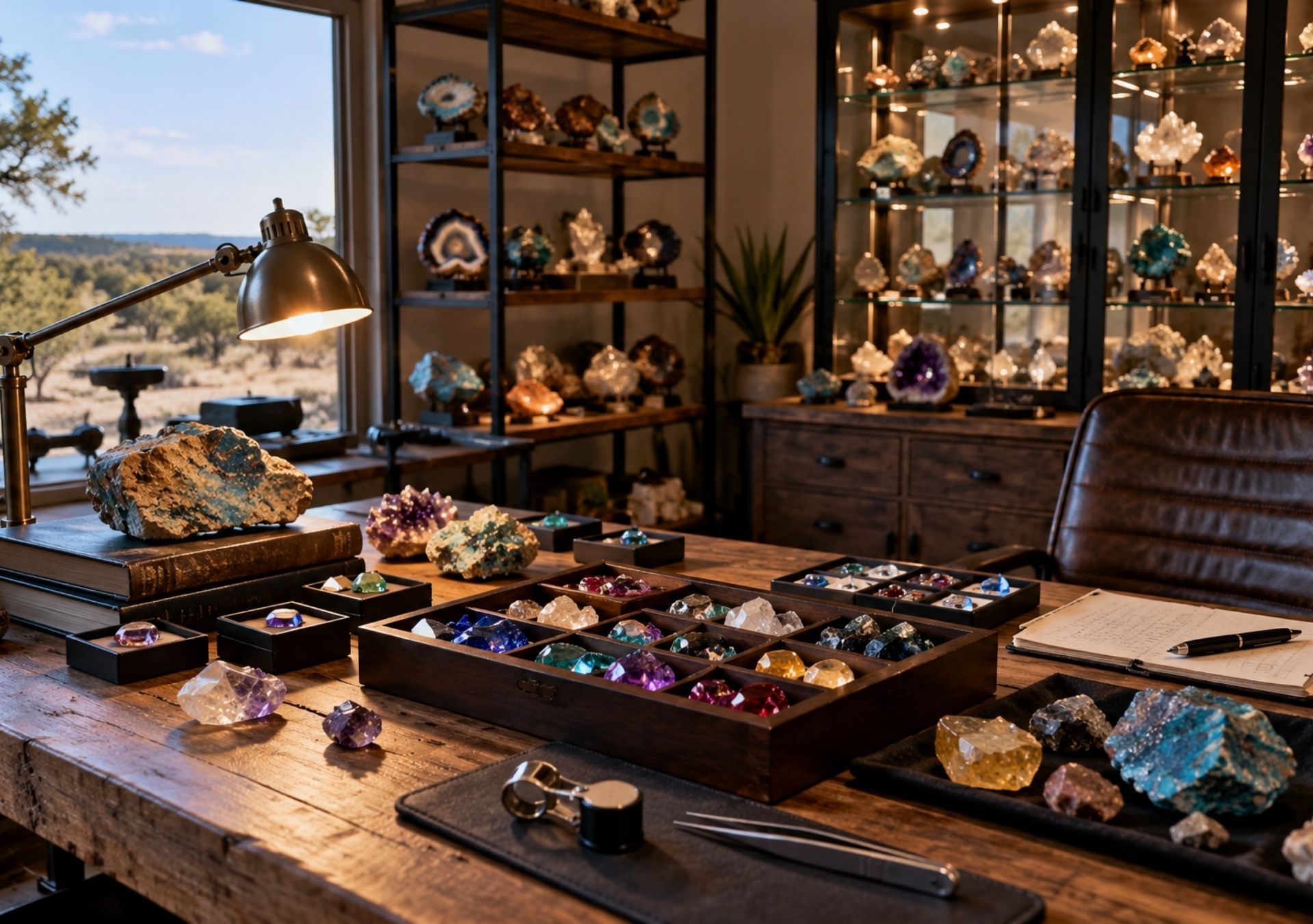
A rare Paraíba tourmaline sourced from a dealer in the Texas Hill Country. A suite of Montana sapphires purchased at the Houston Gem & Mineral Show. A family collection of estate jewelry passed down through three generations. These aren't hypothetical scenarios; they're the kinds of collections sitting in safes, display cases, and bank vaults across Texas right now, often with inadequate insurance protection.
Getting proper coverage for a gemstone collection in Texas requires more than a quick phone call to your
homeowners insurance agent. You need to think through valuation, how stones are protected during transit and storage, and whether scheduled property coverage makes sense for your situation. Texas brings its own set of challenges, from hurricane exposure along the Gulf Coast to hailstorms that can shatter windows and expose a home safe to the elements. The state's insurance regulations also carry specific quirks that affect how policies are written and priced. If you own gemstones worth more than a few thousand dollars, understanding these details isn't optional. It's the difference between full recovery after a loss and a check that doesn't come close to covering what you've lost.
Understanding Risk Factors for Texas Gemstone Owners
Texas is enormous, and the risks your collection faces depend heavily on where you live. A collector in Galveston deals with very different threats than someone in Amarillo or Austin. That said, certain dangers are universal across the state, and your insurer will evaluate all of them when underwriting your policy.
Natural Disaster Vulnerabilities in the Lone Star State
Hurricane season runs from June through November, and coastal cities like Houston, Corpus Christi, and Beaumont sit squarely in the danger zone. Storm surge and flooding can destroy a ground-level safe in hours. Inland collectors aren't off the hook either: Texas averages more tornadoes per year than any other state, and the spring hail season regularly produces baseball-sized stones that punch through roofs.
Flooding is a critical gap to watch. Standard homeowners policies and most inland marine floaters exclude flood damage. If your collection is stored below the second floor in a flood-prone ZIP code, you'll need to address that gap separately. Wildfire risk has also grown in central and west Texas, particularly during drought years.
Common Security Risks for High-Value Private Collections
Burglary is the most straightforward threat, and Texas's sheer size means rural properties can sit miles from the nearest law enforcement response. Insurers typically require a minimum security standard for scheduled gemstone coverage, often a TL-rated safe bolted to a concrete floor, a monitored alarm system, or both.
One thing to keep in mind: theft isn't always a stranger kicking in a door. A significant percentage of high-value jewelry and gemstone claims involve people who had legitimate access to the home, whether that's a contractor, housekeeper, or family member. Your policy's treatment of "mysterious disappearance" matters here. This coverage
protects items that vanish without evidence of a specific theft event, and not every policy includes it. Ask your agent directly whether your policy covers mysterious disappearance, and get the answer in writing.
Comparing Homeowners Insurance vs. Specialized Scheduling
Most Texas homeowners assume their existing policy covers their gemstone collection. Technically, it does, but the limits are so low that the coverage is almost meaningless for a serious collector.
Standard Policy Limits for Jewelry and Loose Stones
A typical Texas homeowners policy caps jewelry and gemstone losses at $1,500 to $2,500 total, regardless of how much your collection is actually worth. That means if you own a $15,000 alexandrite and a $30,000 set of Colombian emeralds, you'd receive the same payout as someone who lost a department store watch. The policy also usually limits coverage to named perils like fire and theft, excluding accidental damage, loss, or mysterious disappearance.
Loose stones present an even trickier problem. Many standard policies define covered items as "jewelry," and an unmounted gemstone may not clearly fall under that definition. If your collection includes rough specimens, cabochons, or investment-grade loose stones, you need explicit confirmation that they're covered.
Coverage Comparison: Homeowners Policy vs. Inland Marine Floater
Here's where the real decision happens. An inland marine floater, sometimes called a personal articles policy, is the gold standard for gemstone collection insurance. It schedules each item individually, covers a broader range of perils, and typically pays agreed value rather than depreciated value.
| Feature | Homeowners Policy | Inland Marine Floater |
|---|---|---|
| Coverage Limit | $1,500-$2,500 aggregate | Per-item scheduled value |
| Covered Perils | Named perils only | All-risk (broader) |
| Deductible | Standard home deductible | Often $0 deductible |
| Transit Coverage | Home only | Worldwide, including shows |
| Mysterious Disappearance | Rarely included | Often included |
| Valuation Method | Actual cash value | Agreed or replacement value |
The catch is cost. A floater typically runs between 1% and 2% of the insured value per year. For a $50,000 collection, that's $500 to $1,000 annually. But compare that to the $2,500 maximum you'd recover under your homeowners policy, and the math speaks for itself.e.
Beyond the homeowners-vs-floater decision, Texas collectors should be aware of a few other coverage structures. A valuable articles endorsement adds scheduled coverage to your existing homeowners policy, which can be simpler to manage but may tie your gemstone coverage to your home policy's claims history. A standalone personal articles policy keeps the two separate, so a gemstone claim won't affect your homeowners premium.
For collectors who buy, sell, or trade regularly, a commercial inland marine policy may be more appropriate. This covers inventory in transit, at shows, and during consignment, situations that personal policies typically exclude. If you're exhibiting at the Tucson Gem Show or shipping stones to a lapidary in Dallas, personal coverage likely won't protect you during those transactions.
Your choice depends on how you interact with your collection. A static, display-only collection at home needs different protection than a working collection that moves between shows, appraisers, and custom jewelers several times a year.
Essential Steps for Documenting Your Collection
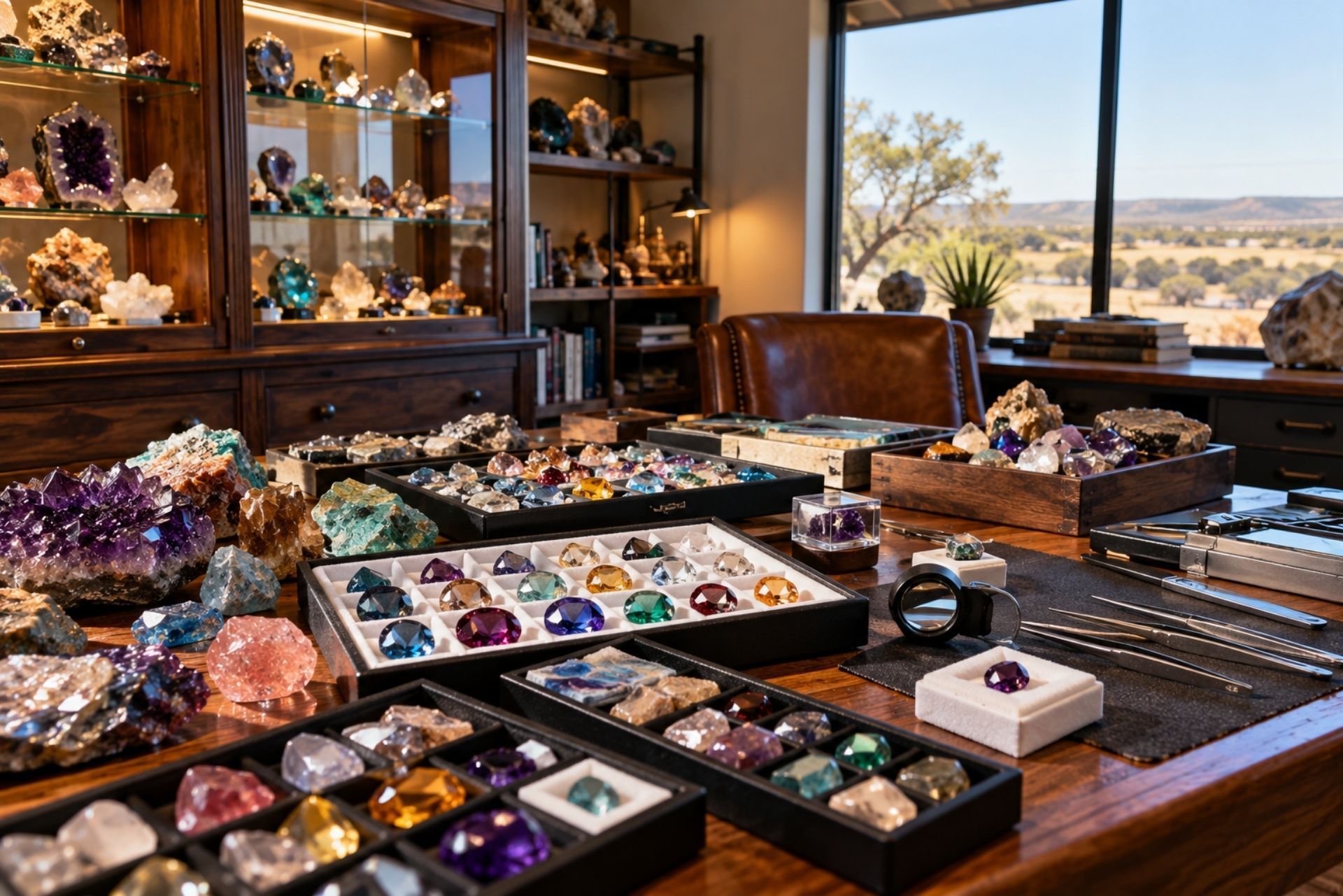
No insurance policy will help you if you can't prove what you owned and what it was worth. Documentation is the foundation of every successful gemstone insurance claim, and the time to build that foundation is now, not after a loss.
Securing GIA or AGS Appraisals for Accurate Valuation
Every stone worth more than $1,000 should have a professional appraisal from a GIA-trained or AGS-certified gemologist. The appraisal should include carat weight, cut quality, color grade, clarity, any treatments or enhancements, and a current fair market or replacement value.
Here's what that means for you: appraisals go stale. Gemstone markets fluctuate, and a tanzanite appraised at $8,000 in 2022 might be worth $12,000 in 2026, or vice versa. Most insurers and appraisers recommend updating valuations every two to three years. If the market moves sharply in either direction, you could be overpaying for coverage or, worse, underinsured.
Keep the original appraisal documents in a fireproof location separate from the stones themselves. A bank safe deposit box works, but a cloud-based backup is even better.
Maintaining a Digital Inventory and Proof of Provenance
Create a digital inventory that includes high-resolution photographs of each stone from multiple angles, scanned copies of appraisals and lab reports, purchase receipts, and any provenance documentation. Software designed for collection management can streamline this process and generate reports your insurer will accept.
Provenance matters more than many collectors realize. A Kashmir sapphire with documented ownership history commands a different value than an identical stone with no paper trail. Provenance documentation also protects you against ownership disputes, liens, or contested inheritance claims. If a stone was part of an estate, keep the probate records. If you purchased from a dealer, keep the invoice with the dealer's credentials.
Texas-Specific Insurance Considerations
Texas has its own regulatory environment that affects how gemstone policies are written and priced. Understanding these state-level details can save you money and prevent coverage gaps.
Navigating Market Value vs. Replacement Cost in Texas
The distinction between agreed value, market value, and replacement cost is critical. Agreed value means you and the insurer settle on a dollar amount upfront, and that's what you receive if the item is lost. Replacement cost pays whatever it takes to replace the stone with one of like kind and quality at current market prices. Market value, or actual cash value, factors in depreciation, which doesn't make much sense for gemstones but can still appear in poorly written policies.
Texas insurers are now prohibited from using price optimization to set premiums based on a policyholder's likelihood to shop around. This means your premium should reflect actual risk factors, not your shopping behavior. It's worth comparing quotes from multiple carriers, since the playing field is more level than it used to be.
One related development: Texas House Bill 1056, which took effect September 1, 2026,
officially recognizes gold and silver bullion as legal tender. While this primarily affects precious metals rather than gemstones, collectors with mixed collections that include gold or silver settings should discuss the implications with their agent. The legal classification of the metal component of a piece could affect how a claim is valued.
Frequently Asked Questions About Gemstone Insurance
Common Inquiries from Texas Collectors
Do I need separate coverage for each stone, or can I insure the collection as a whole? For high-value stones, individual scheduling with separate appraisals gives you the strongest protection. Blanket coverage can work for lower-value items, but you'll typically receive less per item in a claim.
Does my coverage protect stones while I'm traveling to a gem show? Standard homeowners policies usually don't. An inland marine floater or personal articles policy generally covers stones worldwide, including during transit to shows, appraisals, or jewelers. Verify this with your agent before you travel.
How often should I update my appraisals? Every two to three years is the standard recommendation. If you acquire a stone in a rapidly moving market, such as Paraíba tourmalines or high-quality spinels, consider annual updates.
What happens if my stone is damaged but not destroyed? Most scheduled policies cover partial loss. If a heat-sensitive stone like tanzanite is damaged during a house fire but survives, your policy should cover the diminished value or cost of recutting. Check whether your policy addresses partial loss explicitly.
Will filing a gemstone claim raise my homeowners insurance premium? If your gemstone coverage is an endorsement on your homeowners policy, yes, it could. A standalone personal articles policy keeps claims separate from your home coverage, which is one reason many collectors prefer that structure.
Is mysterious disappearance coverage standard in Texas policies? No. Mysterious disappearance is a specific coverage feature that some policies include and others exclude. If you can't account for a stone's whereabouts and there's no evidence of theft, you need this coverage to file a claim. Always confirm it's included before binding a policy.
Making the Right Choice for Your Assets
Protecting a Texas gemstone collection requires more than a default homeowners policy and a good safe. The right insurance structure depends on your collection's value, how often stones move in and out of your home, and how much risk you're willing to absorb yourself.
Start with professional appraisals for every significant stone. Build a digital inventory with photographs, lab reports, and provenance records. Then talk to an agent who understands scheduled property coverage for collectibles, not just someone who sells homeowners policies. Ask specifically about agreed value, mysterious disappearance, transit protection, and whether a standalone policy makes more sense than an endorsement.
Texas collectors face a unique combination of natural disaster exposure, security challenges, and regulatory details that shape how coverage works here. The good news is that the state's ban on price optimization means you can shop aggressively without penalty. Get multiple quotes, compare the actual policy language, and don't settle for a policy that leaves your most valuable stones exposed. The premium you pay today is a fraction of what you'd lose without proper coverage tomorrow.
About The Author: Aaron Husman
As COO of The Phoenix Insurance, I’m focused on building lasting client relationships and delivering insurance solutions that make protection simple and effective. With years of experience in commercial and personal insurance, I take pride in helping individuals and businesses find coverage that brings confidence and peace of mind.
customer reviews
See What Our Clients Say About Us
Types of Auto Insurance
Insurance For Car Collectors By Car Collectors
Our team specializes in providing tailored insurance coverage for car collectors. Whether you own a rare classic, an exotic beauty, or a powerful muscle car, we understand the unique needs of your collection and work to ensure it’s protected with the care and expertise it deserves.


Contact us for better help and services. Explore all types of car insurance
FREQUENTLY ASKED QUESTIONS
At The Phoenix Insurance, we’re committed to answering your most pressing questions to ensure you feel confident about your coverage. From understanding the benefits of working with an independent agency to the specific insurance options we offer for Texas residents, we’ve got you covered.
What makes The Phoenix Insurance different from other insurance providers?
The Phoenix Insurance is an independent agency, meaning we work with multiple insurance carriers to find the best coverage and rates for your unique needs. Our proactive support and commitment to personalized service set us apart from other providers.
Why should I choose an independent insurance agency in Texas?
Independent agencies like The Phoenix Insurance offer more flexibility and personalized service than large, single-carrier companies. We compare coverage options from top-rated carriers to ensure you get the most value for your money.
Does The Phoenix Insurance provide coverage for real estate investors?
Yes, we specialize in insuring real estate investments, including single-family homes, apartments, commercial buildings, and industrial properties. Our team has extensive experience protecting real estate assets across Texas.
How does The Phoenix Insurance handle claims?
We guide clients through the entire claims process, working directly with the insurance carrier to ensure quick and fair resolutions. Our team is dedicated to providing the support you need when it matters most.
What types of insurance does The Phoenix Insurance offer for Texas residents?
We offer a wide range of personal and business insurance options, including home, auto, umbrella, and recreational vehicle coverage for individuals, as well as liability and property insurance for businesses and real estate investors.
Insurance Knowledge. Stories. Tips.
Our Latest Blogs
Explore expert tips, industry insights, and helpful resources from The Phoenix Insurance to stay informed and make confident decisions about your coverage.



Contact Us