

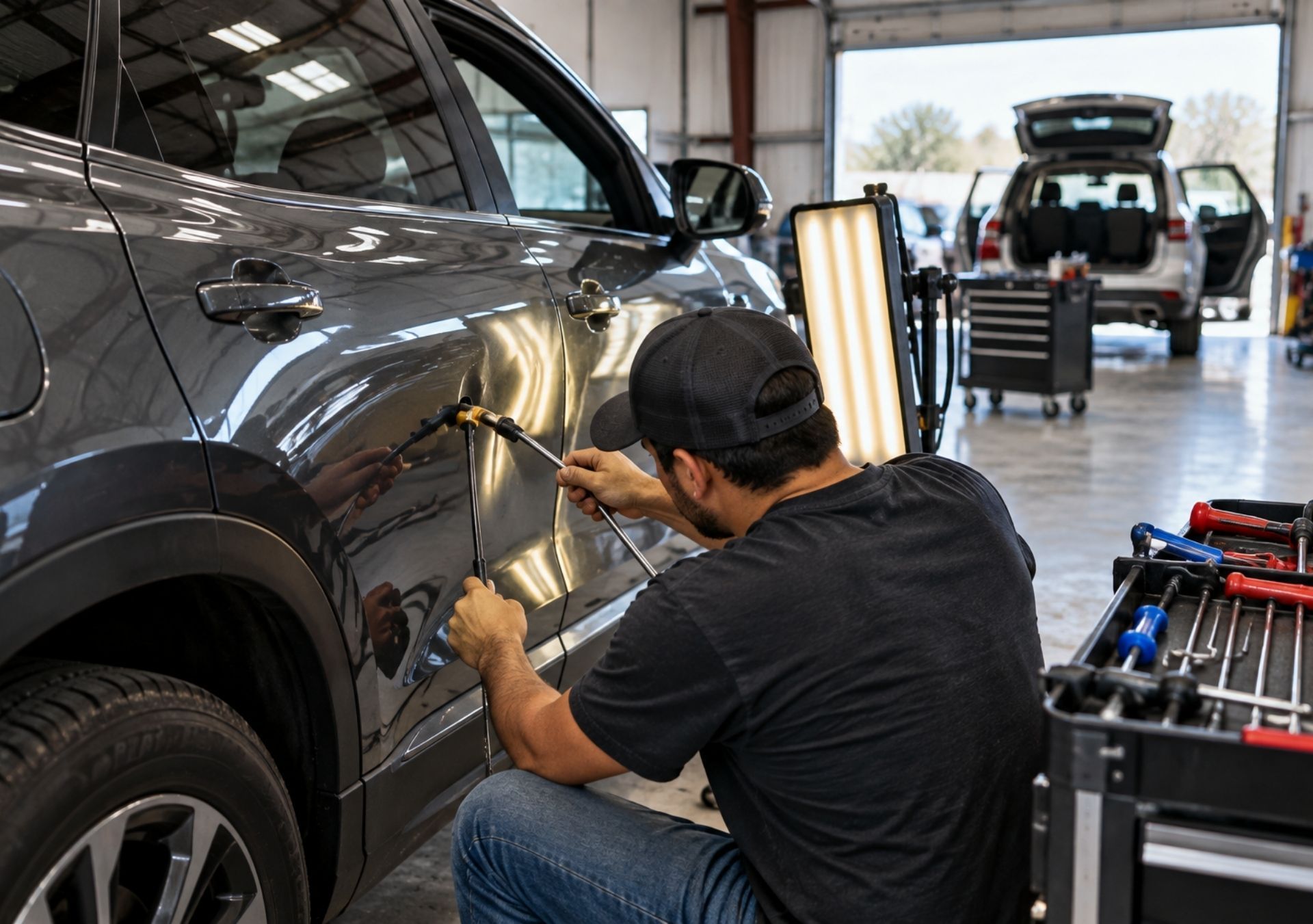
A single hailstone the size of a golf ball can turn a quiet Tuesday afternoon into a six-figure liability event for a paintless dent repair shop. Texas sees more severe hail events than nearly any other state, and PDR shops sit right at the intersection of that risk: you're fixing the damage while simultaneously exposed to it. Whether you run a fixed location in Dallas or chase storms across the Panhandle with a mobile rig, the right insurance setup isn't optional. It's what keeps you in business after a bad week.
Getting insurance for a Texas PDR shop means thinking about liability, property coverage, protection for customer autos in your care, and business interruption policies that keep revenue flowing when something goes wrong. The tricky part is that PDR operations don't fit neatly into a standard auto body shop policy. Your tools are specialized, your work often happens on-site at a customer's home or dealership lot, and hail season can triple your workload overnight. That creates a unique risk profile that generic policies won't fully address.
This guide breaks down each coverage type, compares basic and extended options, and walks through the cost factors and common mistakes that catch new shop owners off guard.
Core Insurance Requirements for Texas PDR Businesses
Every PDR shop in Texas needs a foundation of coverage that accounts for the physical risks of the work, the vehicles you handle daily, and the people on your payroll. Skipping any of these creates gaps that can drain your bank account fast.
General Liability for Shop and Mobile Operations
General liability (GL) covers third-party bodily injury and property damage claims. If a customer trips over an air hose in your shop, or if you accidentally crack a windshield while working a dent, your GL policy responds first. Professional standards for Texas PDR shops often include $1 million per occurrence and $2 million aggregate limits, which are frequently required by commercial leases (https://www.insureon.com/auto-services-business-insurance/cost).
Here's what that means for you if you run mobile operations: standard GL policies written for a fixed shop location may not extend full coverage to work performed at a dealership lot or a customer's driveway. You need to confirm that your policy covers off-premises operations. Some insurers add a mobile endorsement; others write it into the base policy. Ask specifically, because a claim denied for "work performed outside the insured premises" is painfully common.
Garagekeepers Liability: Protecting Customer Vehicles
Garagekeepers liability is separate from general liability, and it's the coverage most PDR owners underestimate. It protects customer vehicles while they're in your care, custody, or control. If a tree falls on a customer's Lexus parked in your lot, or if a technician accidentally pushes a tool through a panel, garagekeepers coverage pays for the damage.
You'll choose between three forms: legal liability only (pays if you're at fault), direct primary (pays regardless of fault), and direct excess (pays after the customer's own insurance). Direct primary costs more but avoids the friction of pointing customers to their own insurer. For shops handling 10 or more vehicles a day during hail season, direct primary is worth the premium difference.
Texas Workers' Compensation Rules
Texas is one of the few states where workers' compensation isn't mandatory for private employers. That said, going without it is a gamble. If a technician injures their back pushing against a stubborn dent, you're personally liable for medical bills and lost wages without a policy in place.
Workers' comp rates for Texas auto repair operations
run about $2.15 per $100 of payroll under Class 8380. For a shop with $300,000 in annual payroll, that's roughly $6,450 per year. Not cheap, but far less than a single serious injury claim. One thing to keep in mind: if you opt out of workers' comp in Texas, you lose important legal defenses if an injured employee sues you.
Coverage Comparison: Essential vs. Comprehensive Protection
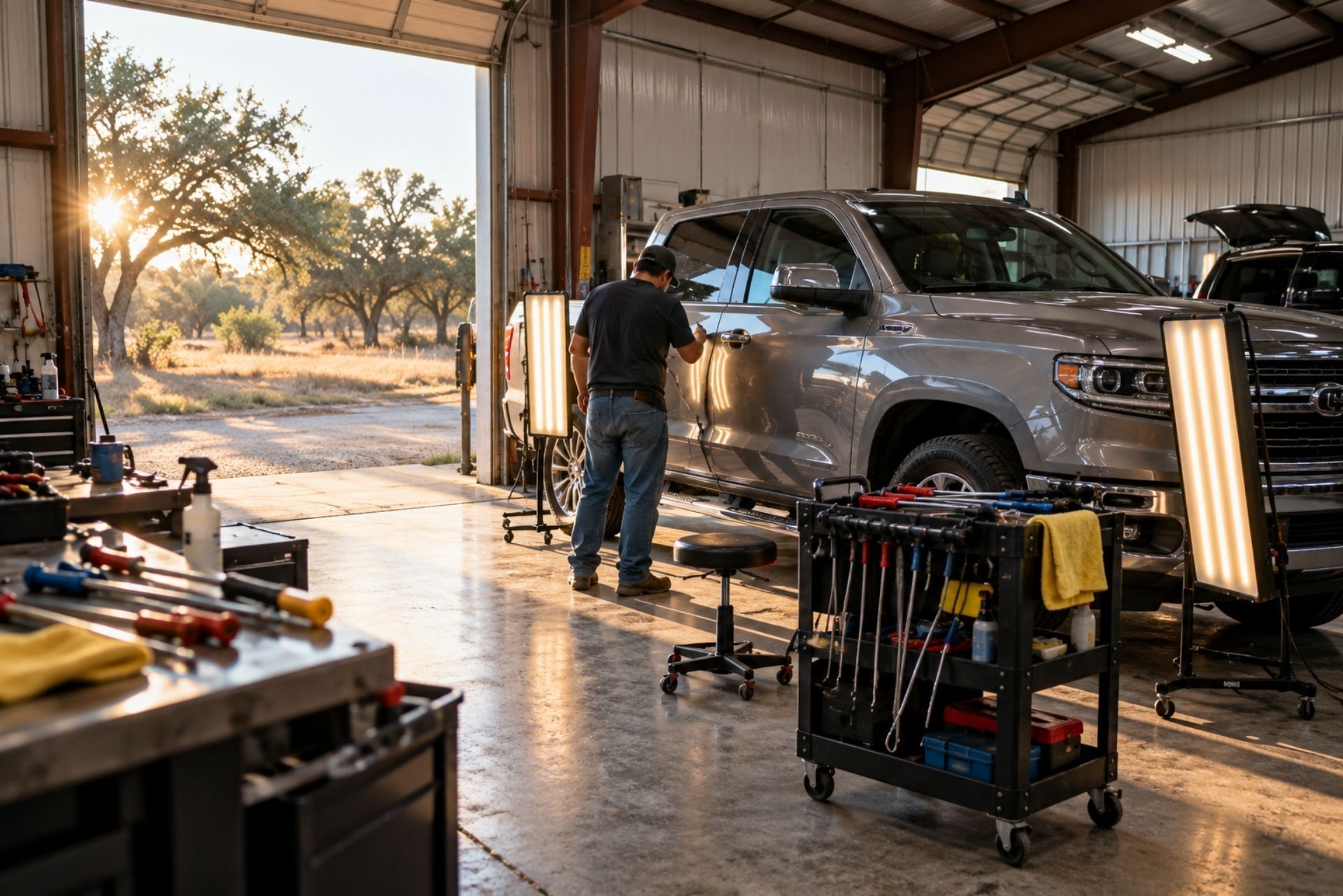
Not every PDR shop needs the same level of coverage. A one-person mobile operation has different exposure than a 10-bay shop running storm teams across three cities. The table below shows what a basic policy package covers versus an extended setup.
Comparison Table: Basic vs. Extended Coverage
| Coverage Type | Basic Package | Extended Package |
|---|---|---|
| General Liability | $1M per occurrence / $2M aggregate | $1M per occurrence / $2M aggregate |
| Garagekeepers | Legal liability only, $50K limit | Direct primary, $150K+ limit |
| Business Personal Property | Named perils only | All-risk with lower deductibles |
| Business Interruption | Not included | 12-month restoration period, 48-72 hr waiting period |
| Commercial Auto | Liability only for one vehicle | Comprehensive + collision for fleet |
| Inland Marine / Tool Floater | Not included | Covers tools in transit and on-site |
| Workers' Compensation | Often skipped by sole operators | Full coverage for all employees |
| Umbrella / Excess Liability | Not included | $1M-$5M excess layer |
The basic package works for a solo operator with low overhead and a small client base. Once you're hiring technicians, storing multiple customer vehicles, or running mobile units, the extended package fills gaps that could otherwise shut you down after a single bad event.
Managing Risks Specific to Paintless Dent Repair
PDR shops face risks that standard auto body policies weren't designed for. Hail season surges, mobile operations, and expensive specialized tools all create exposure that requires targeted coverage.
Hail Storm Catastrophe Response and Surge Coverage
Texas hail season, roughly March through June, is both the busiest and riskiest time for PDR shops. Moderate hailstorm repairs in the Austin area typically range from $600 to $2,500 per vehicle, while severe damage can push past $8,000. When a major storm hits, your shop might take in dozens of vehicles in a single day, dramatically increasing your garagekeepers exposure.
The catch is that a growing number of commercial property insurers are adding cosmetic damage exclusions to policies in 2026. These exclusions let insurers deny claims for hail dents that don't affect the functional integrity of a structure or vehicle. If your shop's own building sustains cosmetic hail damage, your property policy might not cover it. Review your policy language carefully before storm season.
You should also confirm that your garagekeepers limits automatically adjust during surge periods, or purchase a seasonal endorsement that increases limits from April through July.
Mobile Unit and Commercial Auto Needs
If you operate mobile PDR units, commercial auto insurance is non-negotiable. Personal auto policies exclude business use, and a claim denied mid-route leaves you exposed to both vehicle damage and third-party liability.
Your commercial auto policy should cover liability, collision, and comprehensive for each vehicle in your fleet. Comprehensive coverage matters because your work van is parked outdoors at customer sites, dealerships, and parking lots, all places where hail, theft, and vandalism happen. Make sure your policy also covers hired and non-owned autos if your technicians ever drive their personal vehicles for business errands.
Tool and Equipment Floaters for Specialized PDR Kits
A professional PDR kit, including specialty rods, glue pulling systems, LED light boards, and blending hammers, can cost between $5,000 and $15,000 (https://doctorpdrtools.com/products/pdr-full-set-business-package). Standard business property policies often cap tool coverage at low limits and may exclude items stored in vehicles or used off-premises.
An inland marine policy, sometimes called a tool floater, covers your equipment wherever it goes: in your shop, in your van, or at a customer's location. These policies typically cover theft, accidental damage, and even mysterious disappearance. Price your floater based on a current inventory with photos and receipts, and update it annually as you add tools.
Factors Influencing Insurance Costs in Texas
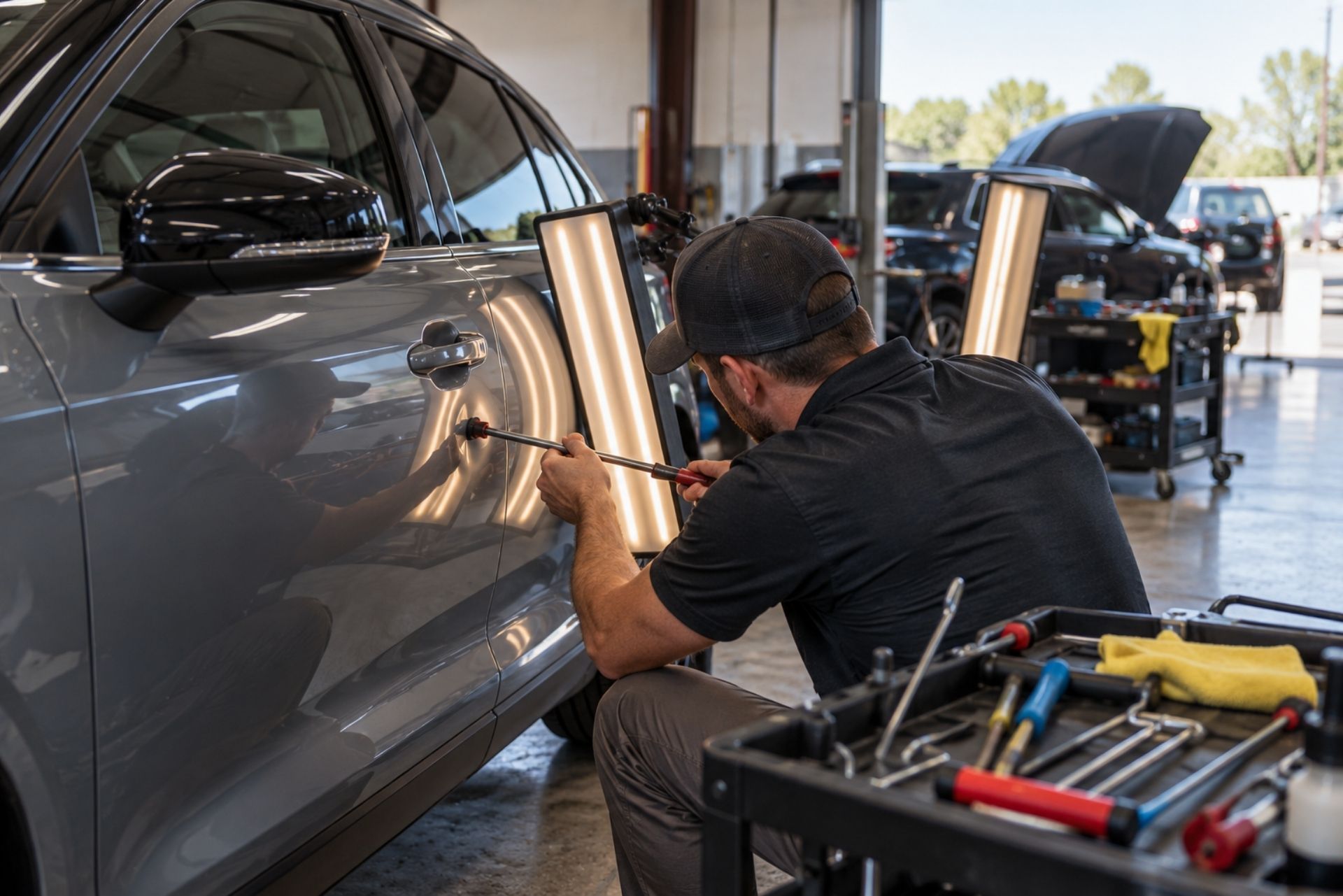
Several variables determine what you'll pay for PDR shop insurance in Texas. Understanding them helps you control costs without sacrificing coverage.
Location plays a major role. Shops in hail-prone corridors like the Dallas-Fort Worth metroplex, San Antonio, and the Texas Panhandle pay higher premiums than those in less exposed areas like the Rio Grande Valley. Your claims history matters too: at-fault claims in Texas typically trigger premium increases of 20% to 40% (https://www.reyeslaw.com/blog/how-much-does-insurance-increase-after-an-accident/).
Revenue and payroll size directly affect premiums for GL and workers' comp. A shop doing $500,000 in annual revenue will pay more than one doing $150,000, simply because higher revenue implies more customer interactions and greater exposure. The number of vehicles you store on-site at any given time also drives garagekeepers pricing.
Texas Senate Bill 1429, effective for policies issued or renewed on or after January 1, 2026, requires insurers to mandate OEM parts and repair processes for vehicles less than 36 months old. This matters because if you damage a newer customer vehicle and need to pay for repairs, OEM parts cost more than aftermarket alternatives. Your garagekeepers limits should reflect that higher repair cost reality.
One more factor worth watching: Texas House Bill 2067 now requires insurers to provide a written explanation for any policy declination, cancellation, or non-renewal. If your insurer drops you, you're entitled to know exactly why, which gives you a chance to fix the issue before shopping for a new policy.
Common Questions About PDR Shop Insurance
FAQ: Conversational Guide for New Shop Owners
Do I need garagekeepers insurance if I only do mobile work? Yes. Garagekeepers liability covers customer vehicles in your care, custody, or control, regardless of where the work happens. If you're working on a car in a customer's driveway, that vehicle is temporarily your responsibility.
How long does business interruption coverage take to kick in? Most 2026 Texas business interruption policies include a 48-to-72-hour waiting period before benefits start. After that, coverage typically lasts for a restoration period of up to 12 months.
Is workers' comp required in Texas? No, Texas doesn't mandate workers' comp for private employers. But opting out removes key legal protections if an employee sues you for a workplace injury. For most shops with even one or two employees, carrying it is the safer choice.
What happens if my insurer cancels my policy after a hail season claim? Under HB 2067, your insurer must give you a written explanation for any cancellation or non-renewal. This gives you documentation to present to other carriers and a clear understanding of what triggered the decision.
Does my business property policy cover my PDR tools in my van? Usually not at full value. Standard property policies often limit coverage for tools stored off-premises or in vehicles. An inland marine floater is the right solution for protecting tools in transit.
Should I get an umbrella policy?
If you store more than a few customer vehicles at a time or run multiple mobile units, an umbrella policy adds a critical extra layer. A $1 million umbrella typically costs between $500 and $1,200 annually for Texas small businesses and sits above your GL and garagekeepers limits (https://www.insureon.com/auto-services-business-insurance/cost).
Making the Right Choice for Your Shop
Protecting a Texas PDR business requires more than a single off-the-shelf policy. You need liability coverage that follows your technicians to dealership lots and driveways, garagekeepers limits that can handle a surge of hail-damaged vehicles, property and tool coverage that travels with your equipment, and a business interruption policy that keeps payroll flowing during forced downtime.
Start by inventorying your actual exposure: how many vehicles do you handle per day, what's your peak season capacity, how many mobile units do you run, and what's the replacement cost of your tool kits? Those numbers drive the coverage limits you need. Then compare quotes from at least three insurers who specialize in garage and auto service risks, not generalists who lump you in with oil change shops.
Review your policies every year before hail season, and update your garagekeepers limits and tool floater values as your business grows. The shops that survive bad storms aren't just the ones with the best technicians. They're the ones whose insurance actually matches their risk.
About The Author: Aaron Husman
As COO of The Phoenix Insurance, I’m focused on building lasting client relationships and delivering insurance solutions that make protection simple and effective. With years of experience in commercial and personal insurance, I take pride in helping individuals and businesses find coverage that brings confidence and peace of mind.
customer reviews
See What Our Clients Say About Us
Types of Auto Insurance
Insurance For Car Collectors By Car Collectors
Our team specializes in providing tailored insurance coverage for car collectors. Whether you own a rare classic, an exotic beauty, or a powerful muscle car, we understand the unique needs of your collection and work to ensure it’s protected with the care and expertise it deserves.


Contact us for better help and services. Explore all types of car insurance
FREQUENTLY ASKED QUESTIONS
At The Phoenix Insurance, we’re committed to answering your most pressing questions to ensure you feel confident about your coverage. From understanding the benefits of working with an independent agency to the specific insurance options we offer for Texas residents, we’ve got you covered.
What makes The Phoenix Insurance different from other insurance providers?
The Phoenix Insurance is an independent agency, meaning we work with multiple insurance carriers to find the best coverage and rates for your unique needs. Our proactive support and commitment to personalized service set us apart from other providers.
Why should I choose an independent insurance agency in Texas?
Independent agencies like The Phoenix Insurance offer more flexibility and personalized service than large, single-carrier companies. We compare coverage options from top-rated carriers to ensure you get the most value for your money.
Does The Phoenix Insurance provide coverage for real estate investors?
Yes, we specialize in insuring real estate investments, including single-family homes, apartments, commercial buildings, and industrial properties. Our team has extensive experience protecting real estate assets across Texas.
How does The Phoenix Insurance handle claims?
We guide clients through the entire claims process, working directly with the insurance carrier to ensure quick and fair resolutions. Our team is dedicated to providing the support you need when it matters most.
What types of insurance does The Phoenix Insurance offer for Texas residents?
We offer a wide range of personal and business insurance options, including home, auto, umbrella, and recreational vehicle coverage for individuals, as well as liability and property insurance for businesses and real estate investors.
Insurance Knowledge. Stories. Tips.
Our Latest Blogs
Explore expert tips, industry insights, and helpful resources from The Phoenix Insurance to stay informed and make confident decisions about your coverage.


Contact Us