

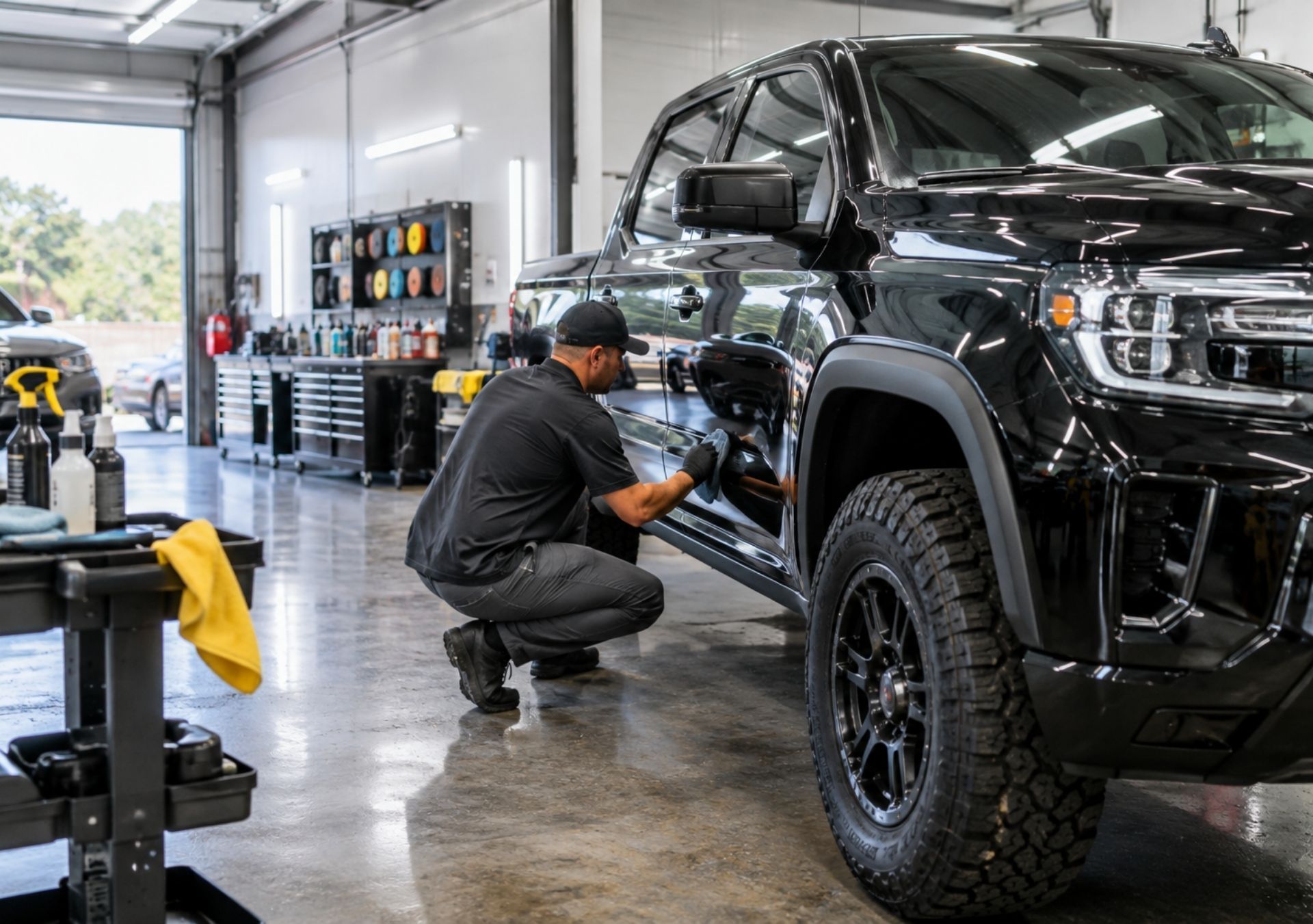
A single swirl mark on a customer's $80,000 Porsche 911 GT3 can turn a profitable week into a financial nightmare. Texas ceramic coating shops face a unique blend of risks: you're handling expensive vehicles, working with volatile chemicals, and operating in a state where hailstorms can shred your building's roof between lunch and closing time. Getting the right insurance coverage isn't just a box to check; it's the difference between recovering from a bad day and closing your doors for good.
If you run a detailing or ceramic coating business in Texas, your insurance needs go well beyond a basic
general liability policy. You need coverage that accounts for customer vehicles in your care, specialized equipment worth tens of thousands of dollars, and the very real possibility that a weather event or lawsuit could halt your operations. The right combination of liability, property, customer auto, and
business interruption coverage forms a safety net tailored to your specific risks. This guide breaks down each policy type, highlights Texas-specific rules you can't afford to ignore, and helps you compare coverage levels so you're not paying for protection you don't need or, worse, missing protection you do.
Core Insurance Policies Every Texas Detailer Needs
Running a ceramic coating shop means juggling multiple risk categories at once. A customer could slip on your freshly mopped floor. A coating could fail weeks after application. A hailstorm could damage three client vehicles parked in your lot overnight. Each of these scenarios calls for a different type of insurance, and none of them are hypothetical. They happen to Texas detailers every year.
The core policies you need form a layered defense. No single policy covers everything, and gaps between policies are where shops get burned. Here's what the foundation looks like.
General Liability: Protecting Against Third-Party Claims
General liability (GL) is your first line of defense against claims from people who aren't your employees. If a client trips over an air hose in your bay and breaks a wrist, GL covers their medical bills and your legal costs. If overspray drifts onto a neighboring business's inventory, GL responds to that property damage claim too.
Ceramic coating shops should evaluate their specific risks when determining general liability limits. That said, if you're working on high-end vehicles or operating in a busy commercial area with foot traffic, you might want higher limits. One thing to keep in mind: GL doesn't cover damage to vehicles you're actively working on. That's a separate policy entirely, and it's one many shop owners mistakenly assume is included.
Garagekeepers Liability: Coverage for Customer Vehicles
This is the policy that lets you sleep at night. Garagekeepers liability covers damage to customer vehicles while they're in your care, custody, or control. Whether a technician accidentally drops a polisher on a hood, a fire breaks out in your shop, or a tree falls on a client's car in your lot, this policy responds.
You'll typically choose between "direct primary" coverage, which pays regardless of fault, and "legal liability" coverage, which only pays if you're found responsible. Direct primary costs more but eliminates arguments about who caused the damage. For a ceramic coating shop handling vehicles worth $50,000 to $200,000, skimping here is a mistake. Set your per-vehicle limit high enough to cover the most expensive car you'd realistically accept.
Professional Liability for Paint Correction and Coating Errors
Professional liability, sometimes called errors and omissions (E&O), covers claims arising from the quality of your work. If a ceramic coating peels within weeks, if paint correction leaves visible damage, or if a customer alleges you used the wrong product on their clear coat, this policy pays for your defense and any settlement.
Standard GL policies exclude claims related to your professional services. That gap is where E&O steps in. The catch is that not every insurer understands the detailing industry well enough to write a useful E&O policy. Look for carriers that specifically cover auto detailing and paint protection services, not generic professional liability designed for consultants or accountants.
Texas-Specific Requirements and Considerations
Texas has its own insurance rules, and some of them changed recently. Ignoring state-specific requirements can leave you uninsured right when you need coverage most.
One major shift took effect on January 1, 2026: Texas Senate Bill 1674 raised mandatory motor vehicle liability minimums to $50,000 for bodily injury or death of one person and $100,000 for two or more persons. If you're driving vehicles to or from your shop, or operating a mobile coating unit, your commercial auto policy needs to meet or exceed these new thresholds.
Texas also doesn't require private employers to carry workers' compensation insurance, which creates both flexibility and risk. And if your commercial property policy contains a cosmetic damage exclusion, a single hailstorm could leave you with a six-figure repair bill and zero coverage.
Understanding Texas Workers' Compensation Options
Texas is one of the few states where workers' comp is optional for most private employers. That sounds like a cost savings, but here's what that means for you: without workers' comp, you lose the protection of the exclusive remedy doctrine. Injured employees can sue you directly in civil court, and Texas courts tend to be generous with damages in these cases.
If you have even one employee mixing chemicals, operating polishers, or moving vehicles, workers' comp is worth the premium. A single back injury or chemical burn claim can easily exceed $100,000 in medical costs and lost wages. Most Texas detailing shops with two or more employees find that carrying workers' comp is cheaper than the legal exposure of going without it.
Commercial Auto Insurance for Mobile Coating Units
Mobile ceramic coating is booming in Texas, especially in sprawling metros like Houston, Dallas-Fort Worth, and Austin. If you're loading a van or trailer with equipment and driving to client locations, your personal auto policy won't cover accidents that happen during business use.
Commercial auto insurance covers your vehicles, your equipment in transit, and liability for accidents you cause on the road. With the new Texas liability minimums now at $50,000/$100,000, make sure your policy reflects these updated figures. Inland marine coverage, which we'll discuss shortly, can extend protection to your tools and equipment while they're in the vehicle.
Comparing Coverage Levels for Ceramic Coating Shops
Not every shop needs the same level of protection. A one-person operation working out of a rented bay has different needs than a five-employee shop handling exotic cars. The key is matching your coverage to your actual risk profile without leaving dangerous gaps.
Comparison Chart: Standard vs. Premium Protection
| Coverage Type | Standard Protection | Premium Protection |
|---|---|---|
| General Liability | Per occurrence / aggregate limits | Higher per occurrence / aggregate limits |
| Garagekeepers | Per vehicle / legal liability | Higher per vehicle / direct primary |
| Professional Liability (E&O) | Per claim limit | Higher per claim limit |
| Business Personal Property | Actual Cash Value | Replacement Cost |
| Business Interruption | 30 days coverage | 90+ days coverage |
| Workers' Comp | State minimum benefits | Enhanced benefits with employer's liability |
| Commercial Auto | $30K/$60K state minimums | Higher combined single limit |
The difference between standard and premium often comes down to how expensive the vehicles you handle are and how long you could survive without income if your shop went offline. A shop coating Ferraris and McLarens needs premium garagekeepers limits. A shop focused on daily drivers might be fine with standard coverage.
Protecting Specialized Equipment and Shop Assets
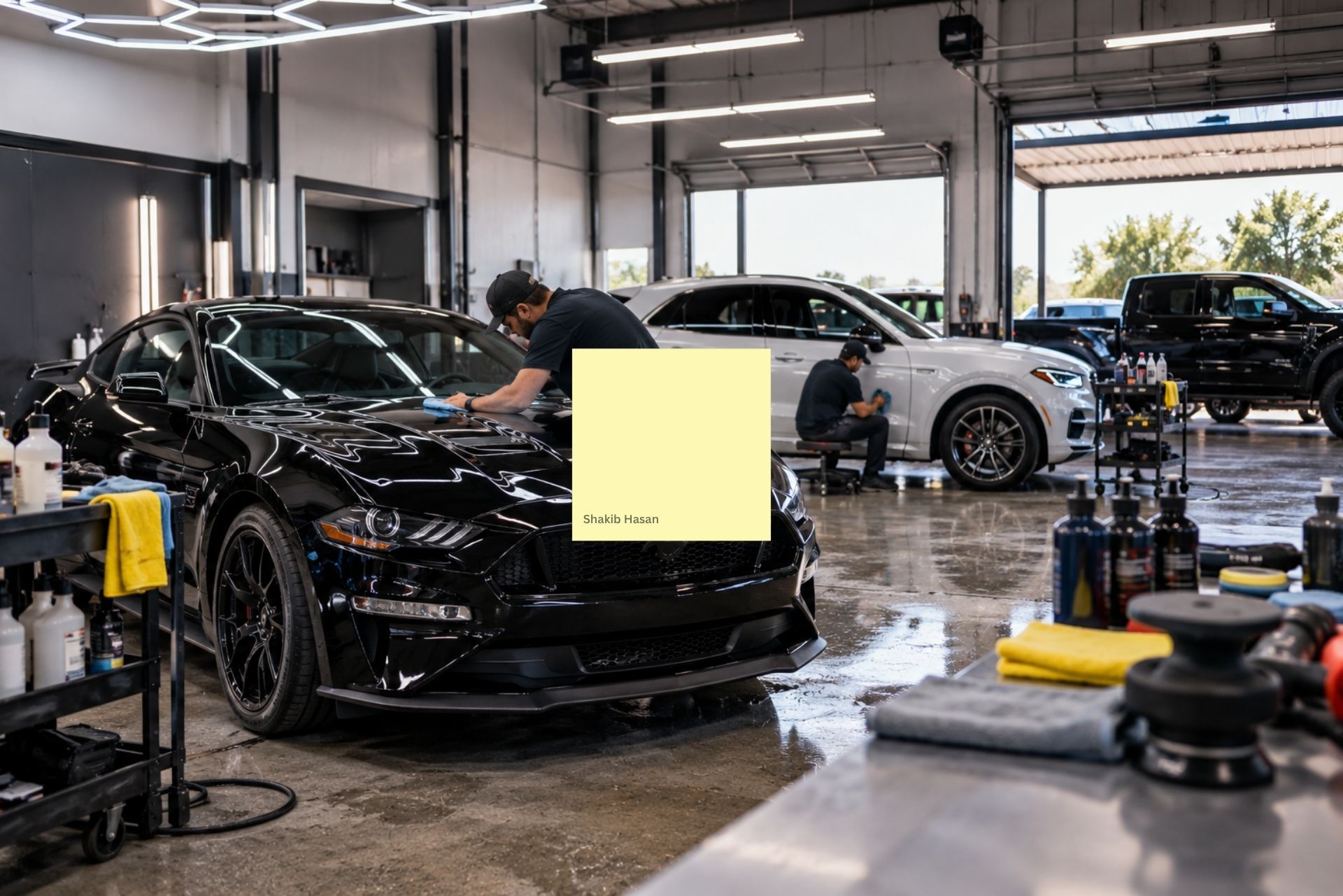
Your shop's physical assets go well beyond the building itself. Paint thickness gauges, infrared curing lamps, dual-action polishers, and ceramic coating products represent a significant investment. A standard commercial property policy might not cover all of it, especially equipment that travels with you or specialized chemical inventory.
Texas weather adds another layer of concern. Insurers in Texas are increasingly denying claims for hail damage under cosmetic damage exclusions if the structure remains functional as a weather barrier. Texas courts have clarified that dents from hail may not count as covered damage if the roof or siding still keeps water out. That means your building could look terrible and still not qualify for a claim. Review your property policy for endorsements HO-145 or TDP-022, which are the specific exclusion forms being aggressively enforced across Texas commercial policies.
Inland Marine Insurance for High-End Polishers and Tools
Inland marine insurance covers equipment and tools that move between locations or aren't permanently attached to your building. For mobile coating operators, this is essential. Your Rupes polishers, Scangrip lights, and portable extraction systems are vulnerable to theft from vehicles, damage during transport, and accidental drops.
A good inland marine policy covers your tools at replacement cost, not depreciated value. If someone breaks into your van overnight and steals $15,000 worth of equipment, you want enough to buy new replacements, not a check for what five-year-old tools are worth on the used market.
Business Personal Property for Chemical Inventory
Ceramic coatings, paint protection films, and detailing chemicals aren't cheap. A single case of professional-grade ceramic coating can run $2,000 or more. Business personal property (BPP) coverage protects your inventory against fire, theft, vandalism, and certain weather events.
One thing to keep in mind: some BPP policies exclude damage from temperature fluctuation. Ceramic coatings and certain chemicals require climate-controlled storage. If your HVAC fails during a Texas summer and your inventory is ruined, you'll want a policy that covers equipment breakdown or spoilage. Ask your agent specifically about this scenario, because it's more common than you'd think.
Common Questions About Detailer Insurance
FAQ: What You Need to Know Before Buying
Does my landlord's insurance cover my equipment and inventory? No. Your landlord's policy covers the building structure. Everything inside your shop, from tools to chemicals to customer vehicles, requires your own policies.
How much does insurance for a ceramic coating shop typically cost? Premiums vary based on revenue, number of employees, vehicle values you handle, and your claims history. Shop owners should consult with insurance agents to determine the specific costs for their operation based on these risk factors.
Can I bundle all my coverage into one policy? A Business Owner's Policy (BOP) bundles general liability, property coverage, and business interruption into one package. You'll still need separate policies for garagekeepers, commercial auto, and workers' comp.
What happens if a customer's car is damaged by hail while parked at my shop? Your garagekeepers policy should cover this, but check whether it includes comprehensive perils like hail. Some policies only cover collision and fire.
Do I need insurance if I'm a sole proprietor with no employees? Yes. You still face liability from customer claims, vehicle damage, and property loss. Going without insurance means every claim comes directly out of your personal assets.
Is business interruption coverage really necessary? If a fire, storm, or major equipment failure shuts your shop down for weeks, business interruption coverage replaces your lost income and covers ongoing expenses like rent and loan payments. For most Texas shops, this isn't optional; it's survival insurance.
Insurance for a Texas ceramic coating shop isn't a single policy; it's a coordinated set of coverages designed to protect you from every angle. Liability protects you from lawsuits. Garagekeepers coverage protects customer vehicles. Property and inland marine policies protect your tools and inventory. Business interruption keeps you afloat when disaster strikes.
Start by taking inventory of your actual risks. What's the most expensive vehicle you'd accept? How much would it cost to replace all your equipment? How many months of expenses could you cover if your shop went dark tomorrow? Those answers determine your coverage limits.
Get quotes from at least three insurers, and prioritize agents or brokers who understand the auto detailing industry. A generic business policy written by someone who doesn't know the difference between a ceramic coating and a wax job will leave gaps you won't discover until it's too late. Take the time now to build the right coverage, and you'll be positioned to grow your business without one bad day wiping out everything you've built.
About The Author: Aaron Husman
As COO of The Phoenix Insurance, I’m focused on building lasting client relationships and delivering insurance solutions that make protection simple and effective. With years of experience in commercial and personal insurance, I take pride in helping individuals and businesses find coverage that brings confidence and peace of mind.
customer reviews
See What Our Clients Say About Us
Types of Auto Insurance
Insurance For Car Collectors By Car Collectors
Our team specializes in providing tailored insurance coverage for car collectors. Whether you own a rare classic, an exotic beauty, or a powerful muscle car, we understand the unique needs of your collection and work to ensure it’s protected with the care and expertise it deserves.


Contact us for better help and services. Explore all types of car insurance
FREQUENTLY ASKED QUESTIONS
At The Phoenix Insurance, we’re committed to answering your most pressing questions to ensure you feel confident about your coverage. From understanding the benefits of working with an independent agency to the specific insurance options we offer for Texas residents, we’ve got you covered.
What makes The Phoenix Insurance different from other insurance providers?
The Phoenix Insurance is an independent agency, meaning we work with multiple insurance carriers to find the best coverage and rates for your unique needs. Our proactive support and commitment to personalized service set us apart from other providers.
Why should I choose an independent insurance agency in Texas?
Independent agencies like The Phoenix Insurance offer more flexibility and personalized service than large, single-carrier companies. We compare coverage options from top-rated carriers to ensure you get the most value for your money.
Does The Phoenix Insurance provide coverage for real estate investors?
Yes, we specialize in insuring real estate investments, including single-family homes, apartments, commercial buildings, and industrial properties. Our team has extensive experience protecting real estate assets across Texas.
How does The Phoenix Insurance handle claims?
We guide clients through the entire claims process, working directly with the insurance carrier to ensure quick and fair resolutions. Our team is dedicated to providing the support you need when it matters most.
What types of insurance does The Phoenix Insurance offer for Texas residents?
We offer a wide range of personal and business insurance options, including home, auto, umbrella, and recreational vehicle coverage for individuals, as well as liability and property insurance for businesses and real estate investors.
Insurance Knowledge. Stories. Tips.
Our Latest Blogs
Explore expert tips, industry insights, and helpful resources from The Phoenix Insurance to stay informed and make confident decisions about your coverage.


Contact Us