

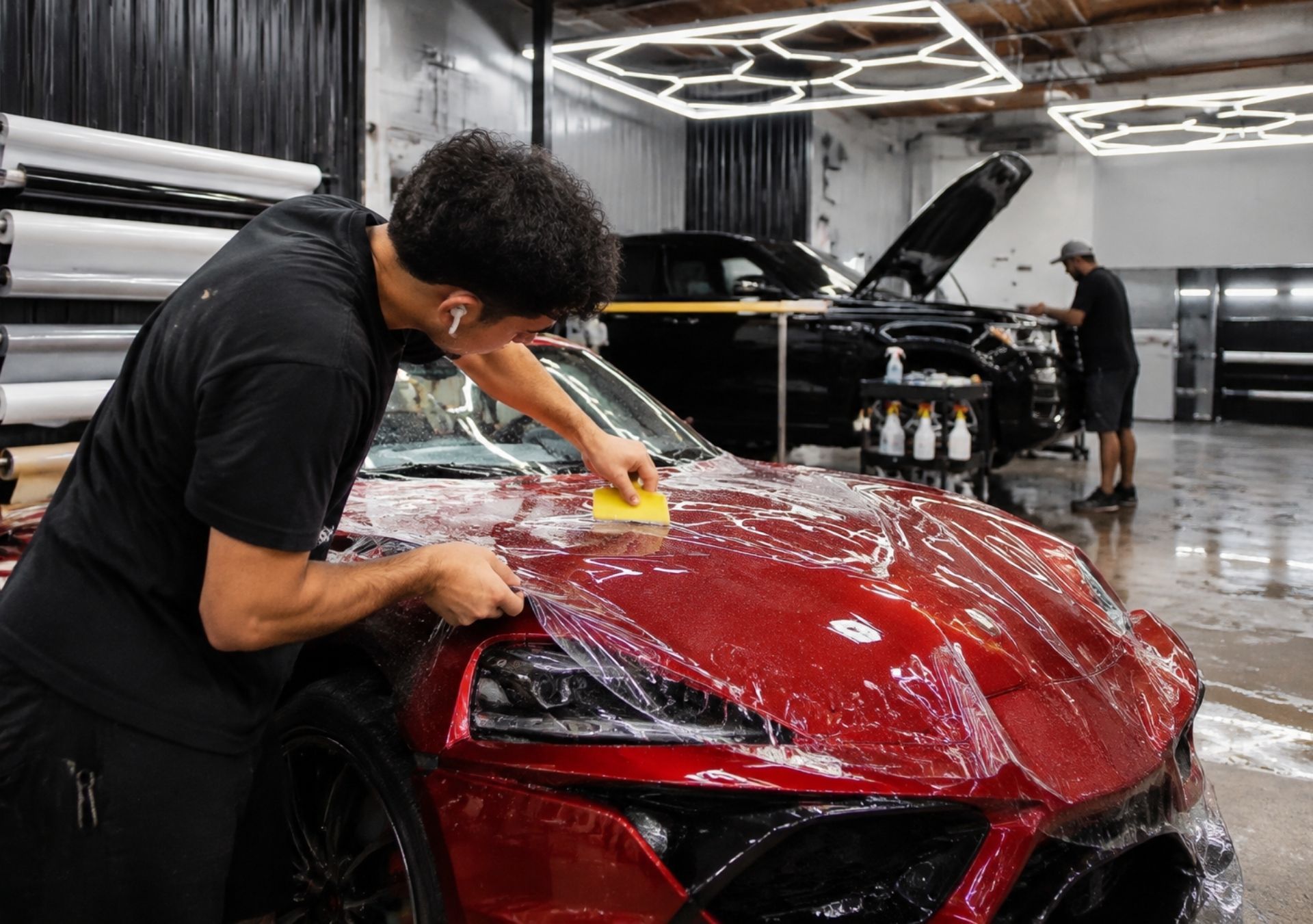
Picture a customer's new Porsche 911 GT3 parked in your bay overnight with half its hood wrapped. At 2 a.m., a sprinkler line bursts and floods the shop. By morning, you're dealing with a damaged car, ruined film rolls, a soaked plotter, and a week of canceled appointments. One bad night can touch four separate insurance problems at once.
That's why Texas paint protection film installer insurance covering liability, property, customer autos, and business interruption needs more thought than a generic small business policy. PPF work puts you in an unusual spot: you hold high-value vehicles you don't own, you work with knives and heat near factory paint, and you keep pricey film inventory in a climate that routinely throws hail and multi-day outages at you.
This guide walks through the coverages that matter, the gaps that catch installers off guard, and the Texas market conditions shaping what you'll pay in 2026. If you run a shop in Houston, Dallas-Fort Worth, Austin, San Antonio, or a mobile operation out of a trailer in the Hill Country, the same core risks apply. Only the details change.
Why Texas PPF Installers Need Specialized Insurance
A standard business owner's policy (BOP) was built for shops that sell things, not shops that take custody of $120,000 vehicles and cut film inches from clear coat. Most BOPs exclude damage to property in your "care, custody, or control." That single clause wipes out coverage for the exact thing your customers are most worried about.
Your risk profile also stacks in ways most businesses don't face. You work with blades on painted surfaces, so a slipped knife on a Tesla Model S quarter panel becomes a paint claim. You use heat guns that can lift clear coat or warp trim. You test-drive cars after install, and you might shuttle vehicles between a detailing location and a body shop. Each activity triggers a different policy.
The Texas market adds its own pressure. A July 2026 NFIB report found 15% of Texas small business owners name insurance as their single biggest problem, five points above the national average. Here's what that means for you: carriers are being selective, and a sloppy application or a vague description of your work can get you declined or priced badly.
The good news is that Texas consumers have some new protections. As of January 1, 2026,
insurers must automatically provide a written explanation when they decline, cancel, or non-renew a policy under House Bill 2067. If a carrier walks away from your shop, you'll at least know why, and you can fix the issue before shopping again.
General Liability vs. Garagekeepers Coverage
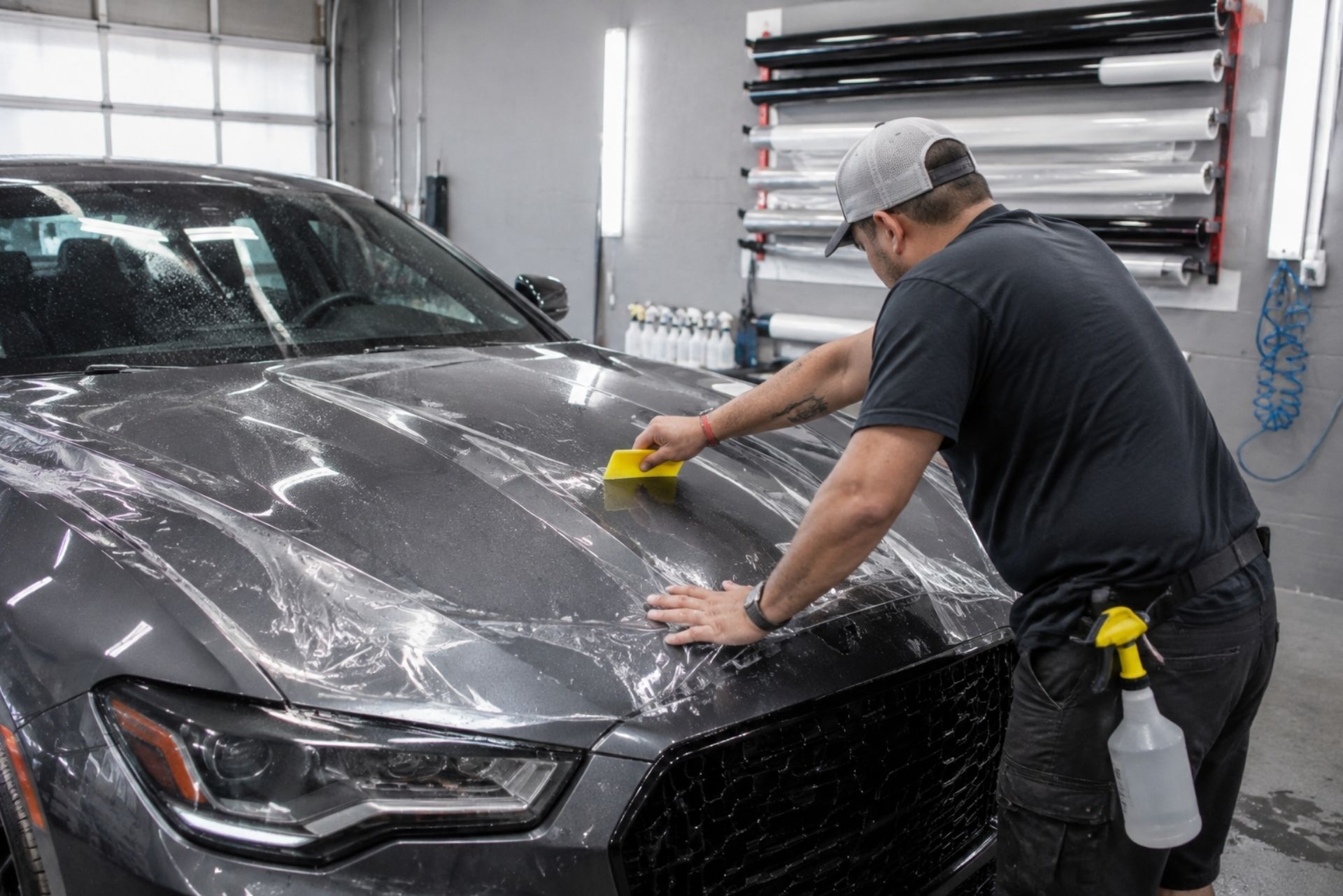
These two policies get confused constantly, and that confusion is behind some of the ugliest claim denials in the auto services world. General liability (GL) covers injuries and damage to third parties and their property, but it typically excludes property you're working on or storing. Garagekeepers fills that hole.
Think of it this way: GL protects you from what happens to people and things around your business. Garagekeepers protects you from what happens to the cars you've been handed the keys to.
Protecting Customer Vehicles in Your Care
Garagekeepers coverage pays for damage to customer vehicles while they're in your shop, on your lot, or being driven by your staff for business purposes. It covers events like fire, theft, vandalism, flooding, and collision. It comes in three main forms, and picking the wrong one is a common mistake:
- Legal liability: Pays only if you're found legally responsible. If hail wrecks a customer's Range Rover on your lot and you weren't negligent, you get nothing, and your customer gets angry.
- Direct primary: Pays regardless of fault. This is the version most PPF shops should want.
- Direct excess: Pays regardless of fault, but only after the customer's own auto policy responds first. Cheaper, but it pushes the claim onto your client's insurance, which hurts reviews and referrals.
One nuance to watch: garagekeepers usually doesn't cover faulty workmanship. If your installer leaves a lifted edge or a stretch mark, that's a redo, not an insurance claim. If your installer cuts through paint while trimming, coverage depends on policy wording, so ask specifically about "knife cuts on substrate" before you bind.
Liability for Slip-and-Fall Incidents
PPF installers spray slip solution and tack solution all day. Those wet, soapy floors are a lawsuit waiting to happen. A customer walking back to check on their Corvette, a delivery driver dropping off film, or a friend tagging along can all go down hard on a slick epoxy floor.
General liability covers their medical bills and your legal defense if they sue. It also covers advertising injury, like a competitor claiming your Instagram post used their photos. Keep in mind that GL doesn't cover your own employees. Their injuries fall under workers' compensation, which Texas doesn't require for most private employers but which you'll want if anyone works for you.
Comparing Essential Coverage Limits for PPF Shops
Limits are where installers either sleep well or get burned. The right number depends on the most expensive car you'd realistically hold at once, multiplied by how many bays you run. A shop doing ceramic coating and full-body PPF on exotics in Highland Park needs very different garagekeepers limits than a mobile installer doing partial fronts on Camrys in Lubbock.
The table below shows how coverage choices typically scale. These are planning frameworks, not quotes.
| Coverage | Basic Setup | Stronger Setup | Why It Matters |
|---|---|---|---|
| General Liability | $1M per occurrence | $1M / $2M aggregate plus umbrella | Slip-and-falls, third-party damage |
| Garagekeepers | Legal liability form | Direct primary form | Pays even when you're not at fault |
| Garagekeepers Limit | One car's value | Full bay capacity value | Fire or hail can hit every car at once |
| Business Property | Actual Cash Value | Replacement Cost | Covers new equipment, not depreciated value |
| Business Income | Not included | 6 to 12 months | Pays bills while you rebuild |
| Commercial Auto | State minimum | Higher liability limits | Shop vehicles and mobile rigs |
Run the math with a real scenario. Say you hold a $95,000 BMW M5, a $140,000 Porsche Taycan, and a $70,000 Tesla Model Y overnight. That's $305,000 sitting in your building. A $100,000 garagekeepers limit leaves you personally on the hook for over $200,000 if a fire takes all three.
Commercial auto is also getting pricier. The Texas Department of Insurance announced that
commercial auto rates will rise 4.9% overall, with bodily injury and property damage liability rates up 5.0% for new and renewal business starting November 1, 2026. If you run a mobile PPF van, budget for that increase at your next renewal.
Insuring Your Shop Property and Specialized Tools
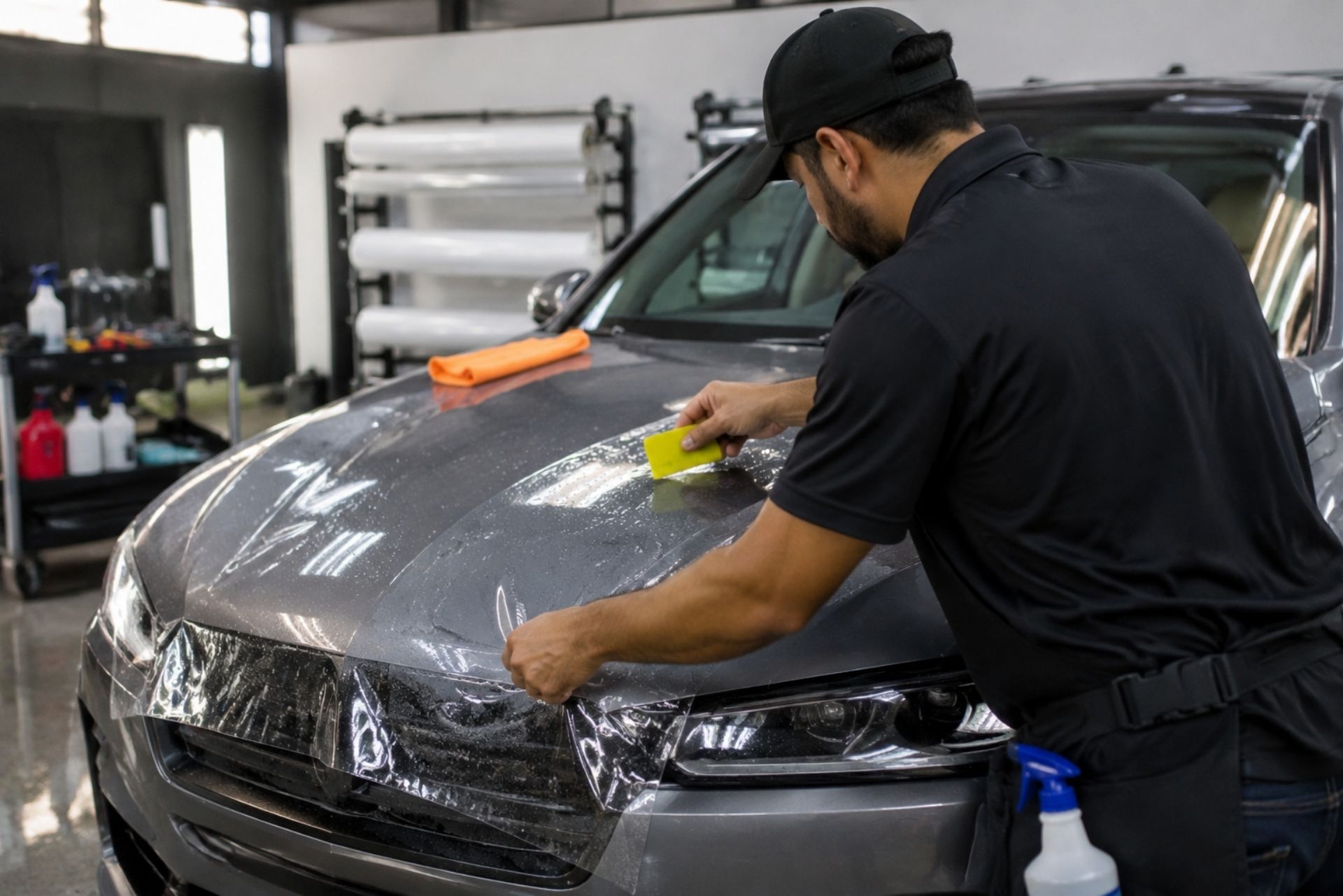
Commercial property insurance covers your building (if you own it), your improvements (if you lease), and your business personal property: equipment, furniture, computers, and inventory. Most installers underinsure here because they guess at values instead of listing them.
The single most important choice is valuation. Actual Cash Value (ACV) pays what your equipment is worth today, after depreciation. Replacement Cost pays what it takes to buy new. A three-year-old plotter might be worth a fraction of its original price on paper, but you can't buy a three-year-old plotter when yours is destroyed. Replacement Cost costs a bit more and is almost always worth it.
Protecting Plotters and Heat Guns
Your plotter is the heart of a pattern-based PPF shop. Lose it, and you're hand-cutting or turning work away. Heat guns, steamers, LED inspection lights, paint depth gauges, and laptops running pattern software all add up faster than most owners expect.
Ask about equipment breakdown coverage, which handles electrical arcing or mechanical failure that standard property policies exclude. A power surge during a summer storm that fries your plotter's control board is a breakdown event, not a fire. If you take tools to car shows or mobile jobs, you'll also need inland marine or "tools and equipment" coverage, because standard property coverage usually stops at your door.
Inventory Coverage for Film Rolls
PPF rolls are expensive, and a busy shop might keep dozens on hand. Film is also sensitive to heat and humidity, which creates a coverage nuance. If your AC dies in August and your film degrades, that's often excluded as "spoilage" or "temperature change" unless you've added it by endorsement.
Keep a running inventory using simple software or even a shared spreadsheet, and photograph your stock monthly. Record brand, roll width, length, and purchase invoices. When a claims adjuster asks how much film you lost, "a lot" won't get you paid. Invoices and dated photos will.
Managing Business Interruption and Lost Income
Business income coverage, often called business interruption insurance, replaces lost profits and pays ongoing expenses when a covered event shuts you down. Rent, loan payments, payroll, and software subscriptions keep coming even when your bays are empty. This coverage keeps you solvent while you rebuild.
Here's a realistic scenario. An electrical fire guts your Plano shop in March. Repairs take four months. You normally clear $35,000 a month in profit and pay $8,000 in rent. Without business income coverage, you're looking at roughly $172,000 in lost profit and fixed costs. With it, the policy covers those amounts up to your limit, subject to the waiting period.
That waiting period matters. Most policies have a 48 or 72 hour deductible window before coverage kicks in. Check your "period of restoration" limit too. A policy capped at 30 days won't help much if it takes three months to source a replacement building and permits.
Two add-ons are worth asking about:
- Extra expense coverage: Pays to rent a temporary bay or relocate so you can keep serving customers.
- Civil authority coverage: Responds when authorities block access to your area after a disaster, even if your building isn't damaged.
One thing to keep in mind: business income only triggers when there's direct physical damage from a covered cause. A slow month or a supplier shortage won't qualify.
Texas-Specific Risks: Hail, Wind, and Power Outages
North Texas sits squarely in one of the most hail-active corridors in the country, and the Dallas-Fort Worth metro sees serious storms nearly every spring. For a PPF shop, hail creates a double exposure: damage to your building and damage to customer vehicles parked outside. If you stage finished cars on an open lot, a ten-minute storm can generate claims on every one.
Many Texas commercial property policies now carry separate wind and hail deductibles, often written as a percentage of the building's insured value rather than a flat dollar amount. A 2% wind and hail deductible on a $600,000 building means you pay the first $12,000. That's not a typo, and owners often don't notice until they file.
Gulf Coast shops in Houston, Corpus Christi, and Beaumont face hurricane wind and storm surge. Flood damage is excluded from standard commercial property policies, so you'll need separate flood coverage if you're anywhere near a flood zone. Ask whether your garagekeepers policy covers flood damage to customer vehicles specifically.
Power outages are the sleeper risk. Winter storms and summer grid strain can knock out power for days. Without power, you lose climate control, your film inventory sits in rising heat, and you can't run plotters. Utility service interruption coverage can extend business income protection to off-premises power failures.
Practical loss prevention steps:
- Move customer vehicles indoors before forecasted storms, and log the time you did it.
- Install a backup generator sized to run HVAC for your film storage room.
- Store film rolls off the floor on racks away from exterior walls and roof drains.
- Photograph every vehicle at drop-off, including existing chips and dents, so prior damage doesn't become your claim.
Common Questions from Texas Detailers and Installers
Does my general liability policy cover a customer's car if I damage it during install? Usually no. GL excludes property in your care, custody, or control, which is why you need garagekeepers coverage.
I'm a mobile installer working at customers' homes. Do I still need garagekeepers? It depends on the policy wording. You may need a form that covers vehicles at other locations, plus commercial auto for your work van and inland marine for your tools.
Can a customer dispute what their auto insurer pays for repairs after a PPF-related claim? Yes. A market change for 2026 requires Texas auto policies to include an appraisal provision that lets policyholders trigger a formal dispute process over repair costs or total loss values, so expect more customers to push back on low payouts.
Will my insurer raise my rates just because I don't shop around? That practice is not allowed here. Texas law prohibits price optimization, meaning insurers can't hike premiums based on how likely you are to stay put.
How fast should I report a claim? Report it within 24 to 72 hours whenever possible. Delays give carriers reasons to question the claim and make evidence harder to gather.
Does insurance cover a bad install, like lifting edges or bubbles?
No. Workmanship errors are a business cost, not an insured loss. Some installers carry errors and omissions coverage, but redos for quality issues usually stay on you.
Before You Buy a Policy
The right insurance setup for a PPF shop comes down to four pillars working together: general liability for people and third-party property, garagekeepers for the customer cars you hold, property coverage for your plotter and film inventory, and business income to keep you afloat when disaster closes your doors. Skip any one, and a single storm or fire can wipe out years of work.
Avoid these mistakes when you shop:
- Don't accept legal liability garagekeepers when you hold high-value vehicles. Ask for direct primary.
- Don't guess at equipment values. List every tool with invoices.
- Don't ignore percentage-based wind and hail deductibles.
- Don't assume film spoilage from a failed AC unit is covered.
Don't describe your work vaguely on applications. "Auto detailing" and "paint protection film installation" price and underwrite differently.
Get quotes from an independent agent who works with auto service businesses and can compare multiple carriers on your behalf. Bring your bay count, the value of the priciest cars you service, your equipment list, and your monthly revenue. A well-documented application gets better terms, and in today's tight Texas market, that preparation is what separates a fair quote from a decline letter.
About The Author: Aaron Husman
As COO of The Phoenix Insurance, I’m focused on building lasting client relationships and delivering insurance solutions that make protection simple and effective. With years of experience in commercial and personal insurance, I take pride in helping individuals and businesses find coverage that brings confidence and peace of mind.
customer reviews
See What Our Clients Say About Us
Types of Auto Insurance
Insurance For Car Collectors By Car Collectors
Our team specializes in providing tailored insurance coverage for car collectors. Whether you own a rare classic, an exotic beauty, or a powerful muscle car, we understand the unique needs of your collection and work to ensure it’s protected with the care and expertise it deserves.



Contact us for better help and services. Explore all types of car insurance
FREQUENTLY ASKED QUESTIONS
At The Phoenix Insurance, we’re committed to answering your most pressing questions to ensure you feel confident about your coverage. From understanding the benefits of working with an independent agency to the specific insurance options we offer for Texas residents, we’ve got you covered.
What makes The Phoenix Insurance different from other insurance providers?
The Phoenix Insurance is an independent agency, meaning we work with multiple insurance carriers to find the best coverage and rates for your unique needs. Our proactive support and commitment to personalized service set us apart from other providers.
Why should I choose an independent insurance agency in Texas?
Independent agencies like The Phoenix Insurance offer more flexibility and personalized service than large, single-carrier companies. We compare coverage options from top-rated carriers to ensure you get the most value for your money.
Does The Phoenix Insurance provide coverage for real estate investors?
Yes, we specialize in insuring real estate investments, including single-family homes, apartments, commercial buildings, and industrial properties. Our team has extensive experience protecting real estate assets across Texas.
How does The Phoenix Insurance handle claims?
We guide clients through the entire claims process, working directly with the insurance carrier to ensure quick and fair resolutions. Our team is dedicated to providing the support you need when it matters most.
What types of insurance does The Phoenix Insurance offer for Texas residents?
We offer a wide range of personal and business insurance options, including home, auto, umbrella, and recreational vehicle coverage for individuals, as well as liability and property insurance for businesses and real estate investors.
Insurance Knowledge. Stories. Tips.
Our Latest Blogs
Explore expert tips, industry insights, and helpful resources from The Phoenix Insurance to stay informed and make confident decisions about your coverage.


Contact Us